


 Home
Home
Hello, may I ask about the techniques and considerations for filling wood cracks with epoxy resin?
What preparatory steps (e.g., cleaning, sanding, or drying the wood) are necessary before filling cracks with epoxy resin, and how do they ensure strong adhesion and prevent future damage?
Why is color-matching important, and how can pigments (e.g., wood-toned dyes, mica powders) be mixed into epoxy to blend seamlessly with the wood’s natural appearance?
How should the filled epoxy be sanded and polished (e.g., progressive grits, buffing compounds) to achieve a smooth, invisible repair while preserving the wood’s texture?
Epoxy Resin Wood Repair: The Ultimate Guide to Sealing Cracks Like a Pro
Related Encyclopedia
- 8015-86-9
- 0
- All (35)
- China (7)
- (35)
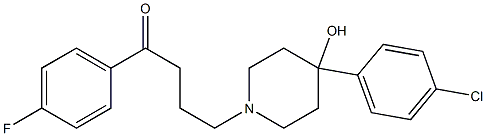
- 61788-97-4
- C21H23ClFNO2
- 375.8642232
- All (1)
- China (0)
- (1)
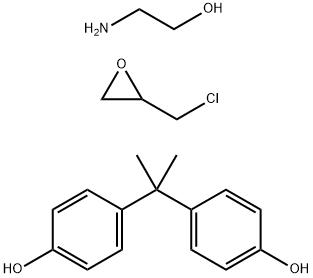
- 38891-59-7
- C20H28ClNO4
- 381.9
- All (2)
- China (0)
- (2)
Related Products More >

- CNY Request For Quotation
- CNY Request For Quotation
- CNY Request For Quotation
- 25085-99-8
- USD 490.0000
- 240kg
- 82428-30-6
- Request For Quotation
- 8015-86-9
- Request For Quotation
- 8015-86-9
- Request For Quotation
 沪ICP备2021018848号-5


1. Essential Wood Pre-Treatment Before Filling
Surface Preparation:
Remove loose debris with a wire brush; sand the crack edges to 120–220 grit (Ra 10–20μm) for mechanical interlock.
Dry wood to <12% moisture content (use a moisture meter); excess water causes epoxy delamination.
Crack Expansion:
Enlarge narrow cracks with a Dremel router bit (1–3mm width) to create a "V" shape, improving epoxy retention.
2. Selecting Epoxy Color for Wood Matching
Transparent vs Pigmented Options:
Clear epoxy for natural wood grain visibility; add 0.5–1% wood-toned pigments (ochre, umber) for color matching.
Custom Mixing Tips:
Test color on wood scraps: mix epoxy with alcohol-based wood dyes (1 drop per 10g resin) until matching the wood’s hue.
Use metallic powders (1–2%) for decorative fills, like bronze inlays on dark woods.
3. Post-Fill Sanding & Polishing Protocol
Abrasive Stages:
120–180 grit sandpaper to level the epoxy flush with wood; avoid over-sanding into the substrate.
320–600 grit for smoothness; wet sanding reduces dust and prevents resin loading on paper.
Finishing Touches:
Apply a wood wax or polyurethane topcoat (20–30μm) to blend the fill with the wood surface; enhances durability.
For high-gloss finishes, buff with 0000 steel wool followed by carnauba wax (0.1mm layer).
1. How to Fill Wood Cracks with Epoxy Resin?
Answer: Clean the crack, mix epoxy resin with hardener, pour into the void, and allow proper curing.
Why it works:
Epoxy resin creates a permanent bond stronger than the wood itself, preventing further cracking while maintaining structural integrity. Its low viscosity allows deep penetration into wood fibers, and it cures to a rock-hard finish that won't shrink or crack over time.
Pre-treatment steps:
Deep cleaning: Remove all dirt and debris using compressed air or a vacuum
Moisture control: Ensure wood is completely dry (below 12% moisture content)
Surface preparation: Roughen smooth surfaces with 80-grit sandpaper for better adhesion
Stabilization: Clamp or brace the wood to prevent movement during curing
Sealing: Apply tape to the underside of through-cracks to contain the resin
2. How to Color-Match Epoxy to Wood?
Achieving perfect color harmony requires careful consideration:
Natural approach: Use clear epoxy to preserve the wood's authentic character
Pigment options: Mix with:
Earth tone powders (ochre, umber)
Alcohol-based wood stains
Mica powder for translucent effects
Custom blending: Create test samples on scrap wood to match perfectly
Artistic effects: Add sawdust from the same wood piece for texture matching
Professional tints: Use specialized epoxy colorants for exact matches
3. Post-Filling Finishing Techniques
Professional-grade finishing makes all the difference:
Initial shaping: Begin with 120-grit sandpaper once epoxy is firm but slightly soft
Progressive sanding: Work through 220, 320, and 400 grits for glass-like smoothness
Wet sanding: Use 600-1000 grit with water for ultra-fine polishing
Buffing compounds: Apply automotive polishing compound with a soft cloth
Final protection: Top with polyurethane or wax for enhanced sheen and protection
**Steps to Fill Wood Cracks with Epoxy Resin:**
1. **Preparation:** Start by cleaning the crack thoroughly to remove any dirt or debris. Use a brush or vacuum cleaner to ensure no loose particles remain. If necessary, slightly widen the crack with a chisel to allow better adhesion of the epoxy.
2. **Mixing the Epoxy:** Follow the manufacturer’s instructions to mix the two components of the epoxy resin (resin and hardener) in the correct ratio. Accurate mixing is crucial for achieving the desired curing and strength.
3. **Applying the Epoxy:** Pour or apply the mixed epoxy directly into the crack using a putty knife, syringe, or similar tool. Ensure the epoxy fills the crack completely. For deeper cracks, apply in layers, allowing each layer to partially cure before adding the next, to avoid air bubbles and ensure thorough filling.
4. **Removing Excess:** After applying the epoxy, use a scraper or a similar tool to remove excess material flush with the wood surface. This makes sanding and finishing easier later on.
5. **Curing and Finishing:** Allow the epoxy to cure as per the manufacturer’s guidelines. Once cured, sand the filled area until smooth and level with the surrounding wood. The repaired area can then be stained, painted, or finished to match the rest of the wood.
**Applications and Examples:**
Epoxy resin is widely used in woodworking for repairing furniture, floors, and structural elements. For example, restoring antique furniture often involves filling cracks and gaps with epoxy to maintain the integrity and aesthetic value of the piece. In boat building, epoxy is essential for repairing wooden hulls, ensuring they are watertight and structurally sound. Additionally, artists and craftspeople use epoxy to create unique designs by filling cracks in wood with colored pigments or metallic powders, producing striking visual effects.
Understanding how to properly use epoxy resin for wood repair ensures long-lasting repairs that enhance the beauty and durability of wooden items.