


 Home
Home
Hey, I’ve been reading about some supplements and came across something called L-lysine sulfate. I know lysine is an amino acid, but I’m not sure what makes this version different or why people talk about it so much in animal feed or nutrition. Does it mean it works better than regular lysine, or is it just another form that’s easier to use? Could you explain what L-lysine sulfate actually is and how it’s applied in daily life or industry?
What Is L-Lysine Sulfate and Why Is It Commonly Used in Nutrition?
Related Encyclopedia
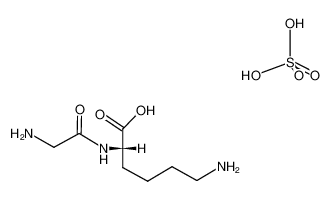
- 20051-97-2
- C8H19N3O7S
- 301.31700
- All (0)
- China (0)
- (0)
- 32733-73-6
- C7H18N4O6S
- 286.30600
- All (0)
- China (0)
- (0)
- 1348455-65-1
- C23H35N3O7S2
- 529.67000
- All (0)
- China (0)
- (0)
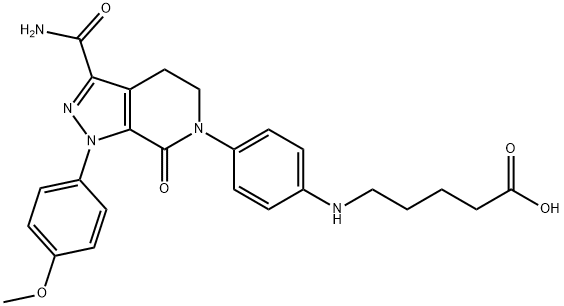
- 2206825-87-6
- C25H27N5O5
- 477.51
- All (0)
- China (0)
- (0)
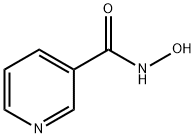
- 5657-61-4
- C6H6N2O2
- 138.12
- All (0)
- China (0)
- (0)
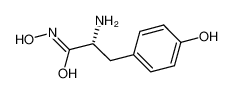
- 4985-42-6
- C9H12N2O3
- 196.20300
- All (0)
- China (0)
- (0)
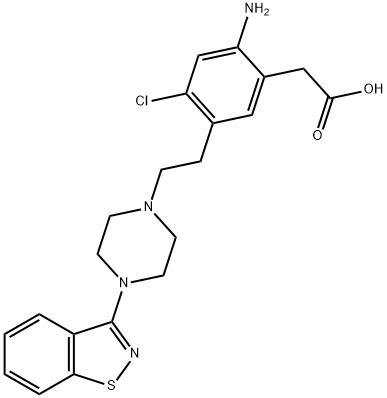
- 1159977-64-6
- C21H23ClN4O2S
- 430.95
- All (0)
- China (0)
- (0)
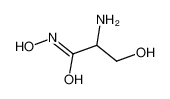
- 55779-32-3
- C3H8N2O3
- 120.11000
- All (1)
- China (0)
- (1)
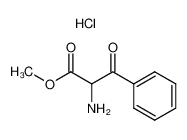
- 38061-23-3
- C10H12ClNO3
- 229.66000
- All (0)
- China (0)
- (0)
- 1351866-52-8
- C15H16ClNO5
- 325.74400
- All (0)
- China (0)
- (0)
Related Products More >

- 60343-69-3
- USD 18.0000
- 25kg
- 657-27-2
- USD 1050.0000
- 25kg
- 66071-96-3
- USD 15.0000
- 25kg
- 72-18-4
- USD 45.0000
- 25kg
- 74-79-3
- USD 92.0000
- 25kg
- 26048-69-1
- CNY 5.0000
- 25kg
- 657-27-2
- USD 3.1000
- 25kg
 沪ICP备2021018848号-5


From a human perspective, it’s not something you usually see on your dinner plate, but it’s important in the background of food production. Farmers and feed companies use L-lysine sulfate to make sure animals get enough of this vital amino acid, which in turn leads to healthier livestock and better food supply. So when people mention it, they’re really talking about a practical way to deliver an important nutrient, not a complicated chemical that you need to worry about.
Physiologically, L-lysine is classified as an essential amino acid because humans and most monogastric animals (such as pigs and poultry) cannot synthesize it endogenously, requiring exogenous intake. It plays a pivotal role in protein biosynthesis, serving as a key building block for the formation of peptide bonds in proteins like collagen, digestive enzymes, and regulatory hormones. Beyond protein synthesis, it is a precursor for carnitine, a molecule critical for fatty acid β-oxidation, which facilitates the conversion of fatty acids into usable energy in mitochondria. It also contributes to the cross-linking of structural proteins in tissues such as skin, bones, and connective tissues, reinforcing tissue integrity.
In professional fields, its significance is most prominent in animal nutrition and food fortification. In animal feed production, L-lysine sulfate is a widely used feed additive—grains (the main component of animal feed) are inherently deficient in lysine, making it the "limiting amino acid" that restricts the utilization of other amino acids; supplementing with L-lysine sulfate eliminates this limitation, improving the biological value of feed protein and promoting animal growth efficiency. Compared to another common form, L-lysine hydrochloride, the sulfate form has lower production costs and avoids the potential risk of excessive chloride ions affecting animal electrolyte balance, especially in high-dose supplementation scenarios. In food fortification, it is added to cereal products (such as bread and instant noodles) to address lysine deficiency in human diets, particularly in populations relying heavily on grain-based foods.
A common misconception is equating L-lysine sulfate with D-lysine sulfate or racemic lysine sulfate. D-lysine, the enantiomer of L-lysine, cannot be recognized by the human body’s aminoacyl-tRNA synthetases, so it cannot participate in protein synthesis or other physiological processes, rendering it nutritionally inactive. Industrial production and commercial applications exclusively use L-lysine sulfate to ensure biological efficacy, as the D-form provides no nutritional benefit and may even interfere with the absorption of the active L-form if present in large quantities. Additionally, some users may miscalculate effective lysine content: due to the presence of sulfate ions, L-lysine sulfate typically contains approximately 78% pure L-lysine by weight, whereas free L-lysine (as a monohydrate or hydrochloride) has a higher active content (around 98% for the hydrochloride form); this difference is critical in dosage determination, especially in feed formulation or dietary supplement preparation, to avoid under- or over-supplementation.
From a physiological standpoint, the primary significance of L-lysine sulfate lies in its role as a precursor for numerous critical biological processes once it is liberated in its free form. As an essential amino acid, it must be obtained through diet or supplementation, and it serves as a fundamental building block for protein biosynthesis. Its metabolic journey involves active transport across the intestinal epithelium, after which it contributes to connective tissue formation through its involvement in collagen cross-linking, a process vital for skin, tendon, and bone integrity. Furthermore, L-lysine is a precursor for the synthesis of L-carnitine, a molecule indispensable for fatty acid transport into mitochondria for energy production. Its antagonistic relationship with arginine regarding cellular uptake pathways also underpins its application in managing certain viral conditions, as it can modulate the availability of arginine, which is crucial for the replication of some viruses.
The practical applications of L-lysine sulfate extend far beyond theoretical biochemistry, deeply embedding it in global industries. In animal nutrition, it is a cornerstone of modern feed formulation, where it is systematically added to cereal-based diets for monogastric animals like poultry and swine to correct for the natural deficiency of lysine in grains such as corn and wheat. This targeted supplementation allows for the creation of more balanced, cost-effective, and sustainable feed rations, ultimately improving feed conversion ratios and reducing the environmental nitrogen footprint of livestock production. The sulfate form is often preferred in this context due to its handling properties, hygroscopic stability, and consistent performance. In the human dietary supplement market, L-lysine sulfate is valued for its high purity and efficacy in supporting immune function, promoting skin health, and aiding in calcium absorption. Its industrial synthesis typically involves a fermentation process using specific microbial strains, followed by a purification and sulfation sequence, showcasing a sophisticated application of biotechnology. The choice of sulfate over hydrochloride, for instance, can be influenced by factors ranging from chloride sensitivity in certain animal species to the desire for a lower chlorine content in final products. The widespread use of this specific compound thus reflects a nuanced understanding of chemical principles, biological needs, and economic imperatives, illustrating how a seemingly simple molecular modification can have profound and far-reaching consequences across multiple domains.