


 Home
Home
When people first hear the name “Sodium bisoxalate,” it sounds a bit complicated. Is it a salt, an acid, or maybe something in between? Could it be used in cleaning products, or is it something you might come across in the lab only? How does this substance behave in water, and is it safe to touch or use at home? If it has “sodium” and “oxalate” in its name, does that mean it’s similar to baking soda or something entirely different? Why would anyone need to understand what Sodium bisoxalate is?
What Is Sodium Bisoxalate and Why Does It Matter?
Related Encyclopedia
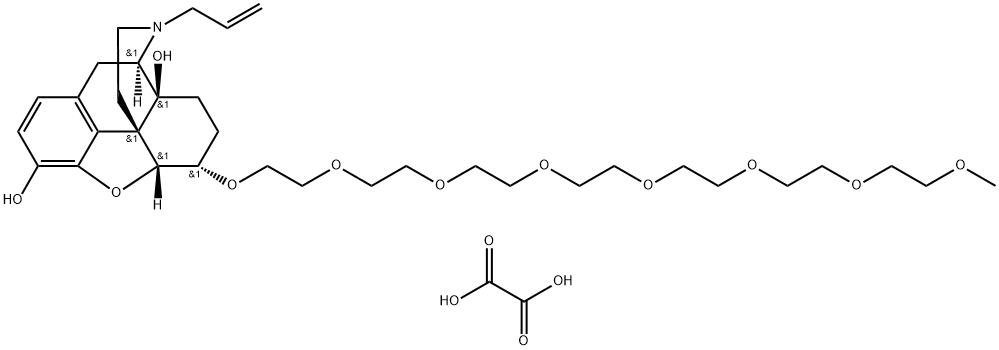
- 1354744-91-4
- C36H55NO15
- 741.83
- All (0)
- China (0)
- (0)

- 62-76-0
- C2Na2O4
- 134
- All (5)
- China (5)
- (5)
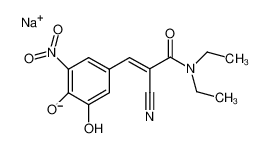
- 1047659-02-8
- C14H14N3NaO5
- 327.26800
- All (0)
- China (0)
- (0)
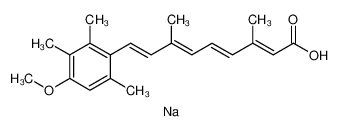
- 925701-88-8
- C21H26NaO3
- 349.41900
- All (0)
- China (0)
- (0)
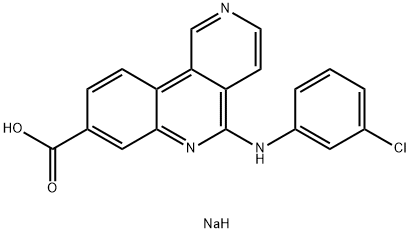
- 1309357-15-0
- C19H13ClN3NaO2
- 373.77
- All (0)
- China (0)
- (0)
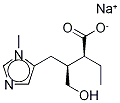
- 92598-79-3
- C11H17N2NaO3
- 248.25405
- All (0)
- China (0)
- (0)
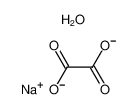
- 16009-92-0
- C2H2NaO5-
- 129.02400
- All (0)
- China (0)
- (0)
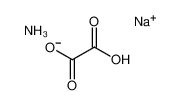
- 84000-96-4
- C2H4NNaO4
- 129.04700
- All (0)
- China (0)
- (0)
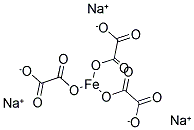
- 5936-14-1
- C6FeNa3O12
- 388.87
- All (0)
- China (0)
- (0)
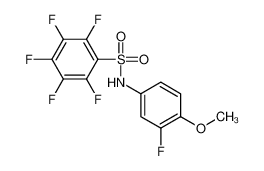
- 195533-53-0
- C13H7F6NO3S
- 371.26000
- All (0)
- China (0)
- (0)
 沪ICP备2021018848号-5


You’re not going to find it sitting on a supermarket shelf like table salt or baking soda, but it might show up in certain cleaning products or in special laboratory uses. It can act like a cleaner or a substance that changes acidity, which makes it useful in more technical settings.
From a physical perspective, sodium bisoxalate usually appears as a crystalline solid that is soluble in water and exhibits acidic properties. It is not a substance commonly encountered in everyday household settings, yet its role in chemistry laboratories is significant, particularly as a reagent in analytical methods. Its acidity and reactivity make it useful for titrations, where precise measurement of concentration is essential. The ability to act as a standard substance arises from its relatively stable composition and predictable dissociation in aqueous environments.
On the physiological side, the presence of oxalates in general carries a direct connection to human health. Oxalates are known to bind calcium strongly, and excessive intake or exposure can contribute to kidney stone formation. Sodium bisoxalate itself is not something intentionally consumed, yet it highlights how salts of oxalic acid interact with biological systems. Its binding affinity illustrates the delicate balance between dietary oxalates, mineral absorption, and excretion, shedding light on why managing oxalate levels is important in nutrition and medicine.
Looking at broader applications, industries dealing with cleaning, textile treatment, and even metallurgy can find utility in sodium bisoxalate. Its acidic nature allows it to act as a mild cleaner, particularly for removing rust or mineral deposits. In analytical chemistry, it provides a controlled environment to study redox reactions, since oxalates can participate as reducing agents under certain conditions. From an interdisciplinary view, the compound sits at the intersection of chemistry, environmental science, and medicine. Its reactivity with metals ties into water treatment, while its role in biological processes connects to clinical research on kidney health.
In this way, sodium bisoxalate illustrates how a relatively simple salt carries implications across several fields. It serves as a reminder that even compounds with narrow practical uses can act as models for understanding larger chemical and biological mechanisms.
The mechanism of action is rooted in the molecular structure of the oxalate ion. The two negatively charged oxygen atoms can coordinate strongly with metal cations, effectively sequestering them. This property is directly leveraged in practical applications, such as in certain specialized cleaning formulations. For instance, it is exceptionally effective at removing rust stains, which are primarily iron oxide, or scale deposits from hard water, which consist largely of calcium and magnesium salts. By binding to the metal ions within these deposits, it dissolves them away from the underlying surface.
Beyond cleaning, this chelating principle finds use in other domains. In textile processing, sodium bisoxalate can be employed to scavenge metal impurities from fabrics, which might otherwise interfere with dyeing processes. It is crucial to handle this compound with care due to its inherent toxicity and its ability to bind essential calcium in the body, which can lead to hypocalcemia if ingested. The utility of sodium bisoxalate, therefore, is a direct consequence of its aggressive metal-complexing nature, a property that must be managed responsibly across its various industrial and domestic uses.
In electrochemistry, sodium bisoxalate derivatives like sodium bis(oxalato)borate (NaBOB) play critical roles as electrolyte additives. NaBOB’s structure—featuring a boron atom coordinated by two oxalate ligands—differs from lithium analogs such as LiBOB (lithium bis(oxalato)borate) primarily in the cation size and solubility. While LiBOB exhibits higher solubility in organic solvents, NaBOB’s lower solubility poses challenges for sodium-ion battery applications, necessitating optimized solvent systems to enhance its performance.
A common misconception arises from conflating sodium bisoxalate with “sodium bioxalate,” a term erroneously used to describe sodium hydrogen oxalate (NaHC₂O₄). Unlike disodium oxalate, which contains two sodium ions per oxalate group, sodium hydrogen oxalate retains one acidic hydrogen atom, altering its reactivity and solubility. This distinction is crucial in fields like pharmaceuticals, where sodium oxalate’s role as a reducing agent and potential toxin contrasts with the milder properties of its hydrogenated counterpart.
Beyond energy storage, sodium bisoxalate complexes influence biological systems. For instance, sodium bis(oxalato)oxovanadate(IV) affects phospholipid metabolism in liver tissues, highlighting its relevance in biochemistry. Similarly, the crystal structure of sodium bis(oxalato)cuprate(II) dihydrate provides insights into copper-oxalate interactions, relevant for both material science and mineralogy. These applications underscore the compound’s versatility, bridging inorganic chemistry, electrochemistry, and biochemistry.
In engineering contexts, sodium bisoxalate’s utility extends to corrosion inhibition and as a precursor for synthesizing advanced materials. Its ability to form stable complexes with transition metals makes it valuable in catalysis and metal-organic framework (MOF) development. However, its toxicity demands careful handling, as ingestion or skin contact can cause severe harm. This duality—of being both a functional chemical and a hazardous substance—requires stringent safety protocols in industrial and laboratory settings.
Compared to other sodium salts like sodium nitrite or sodium phosphate, sodium bisoxalate’s defining feature is its oxalate ligand, which confers unique coordination chemistry. While sodium nitrite participates primarily in redox reactions and food preservation, and sodium phosphate serves as a buffer or emulsifier, sodium bisoxalate’s role in metal complexation and energy storage sets it apart. Understanding these differences is essential for selecting the appropriate compound in specific applications, avoiding misuse driven by superficial similarities.