


 Home
Home
Have you ever wondered what phosphonium tetrasulfate solution really is and how it shows up in real-world use? People often hear names like this in discussions about chemistry, but the terms sound so complex that they can feel confusing. Could this solution be something linked only to labs, or does it have a place in our everyday world? Is it mainly an industrial material, or does it play a role in making things safer or more efficient?
What Is Phosphonium Tetrasulfate Solution and Why Does It Matter?
Related Encyclopedia

- 12339-19-4
- HP+
- 31.98170
- All (0)
- China (0)
- (0)
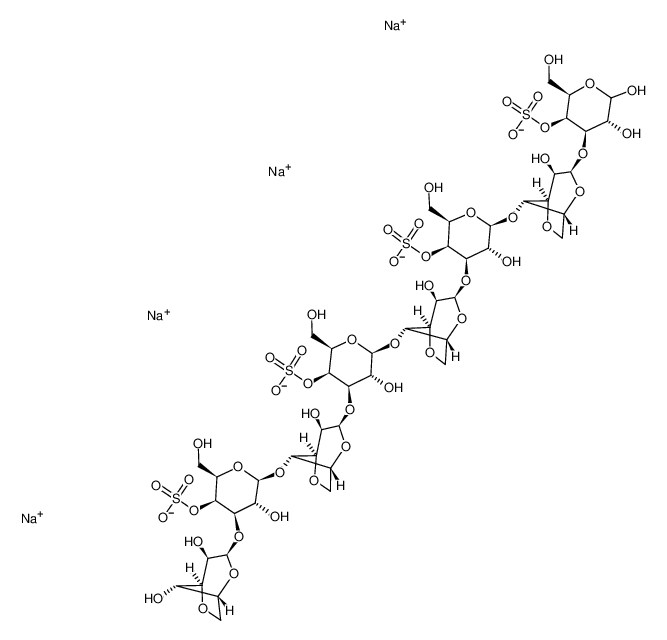
- 133647-94-6
- C48H70Na4O49S4
- 1651.26000
- All (1)
- China (0)
- (1)
- 128904-19-8
- BClF3H4P
- 138.26500
- All (0)
- China (0)
- (0)
- 12191-23-0
- DP+
- 32.98790
- All (0)
- China (0)
- (0)
- 164596-64-9
- H4IP
- 161.91000
- All (0)
- China (0)
- (0)
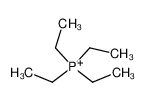
- 13983-95-4
- C8H20P+
- 147.21800
- All (0)
- China (0)
- (0)
- 120777-72-2
- C24H44P+
- 363.58000
- All (0)
- China (0)
- (0)

- 1034903-81-5
- NOP+
- 60.97990
- All (0)
- China (0)
- (0)
- 93284-88-9
- BBr4H4P
- 365.43300
- All (0)
- China (0)
- (0)
- 132612-82-9
- BH8P
- 49.84830
- All (0)
- China (0)
- (0)
Related Products More >

- Request For Quotation
- 93119-10-9
- Request For Quotation
- 25kg/ea
- 916793-34-5
- Request For Quotation
- Bottle
- 896-33-3
- Request For Quotation
- 896-33-3
- Request For Quotation
- 896-33-3
- Request For Quotation
- 896-33-3
- Request For Quotation
- 896-33-3
- Request For Quotation
 沪ICP备2021018848号-5


One way to imagine it is to think of it as a helper liquid—on its own, it might not seem very exciting, but when used in the right spot, it supports bigger systems to run better. Just like detergent boosts washing power, this solution can give industries a boost in what they’re making or maintaining.
From a structural and mechanistic perspective, the phosphonium ion differs significantly from more common nitrogen-based ammonium compounds, because phosphorus can expand its valence shell. This allows for different bonding geometries, influencing how the solution behaves in catalytic systems or electrochemical environments. The sulfate component, with its high charge density, enhances solubility and contributes to the ability of the solution to conduct ions efficiently, which is relevant in industrial processing and laboratory applications where controlled acidity or ionic transfer is necessary.
When looking across disciplines, the solution reveals a set of potential roles. In industrial chemistry, it may be applied as a medium to facilitate reactions that require strong ionic environments or as part of formulations for cleaning or corrosion control. In environmental contexts, phosphonium-based compounds have been examined as agents in water treatment, since they can interact with charged contaminants or biofilms. Within materials science, its ionic nature also suggests potential use in advanced electrolytes for energy storage, where the balance of stability and conductivity is key.
Although not commonly encountered in daily consumer products, the underlying principles connect indirectly to areas people rely on. Processes such as manufacturing, purification, and stabilization often depend on specialized chemical solutions like this one, even if the name remains unfamiliar to the public. Thinking of it as a highly charged and specialized liquid helps in understanding why it plays a supporting role in making larger systems function more effectively across multiple industries.
A key attribute of such solutions is their capacity to act as powerful Brønsted acidic catalysts. The mechanism involves the tetrasulfate anion interacting with substrates, polarizing bonds, and facilitating proton transfer reactions. This catalytic activity is coupled with the solution's role as a high-boiling-point reaction medium, allowing reactions to be conducted at elevated temperatures without the pressure constraints of volatile organic solvents. Its practical connection is most evident in industrial synthesis and materials processing, where it serves as a multifunctional component for conducting clean and efficient chemical transformations.
One concrete example of its application is in the surface etching of metals like copper for printed circuit board manufacturing. Here, the phosphonium tetrasulfate solution selectively removes copper oxide layers from the metal surface through its acidic and complexing action, preparing a pristine surface for subsequent bonding or plating steps. Another instance is its use as a condensing agent in the synthesis of polyesters, where it catalyzes the esterification reaction between diacids and diols while simultaneously dissolving the oligomeric intermediates, leading to controlled polymer growth and high molecular weights.
In professional applications, THPS solution is valued for its dual functionality as a biocide and a flame retardant. As a biocide, it disrupts microbial cell membranes through electrostatic interactions, leveraging its cationic nature to adsorb negatively charged particles, such as bacteria or algae, in water systems. This mechanism is particularly effective in oil field pipelines, fish farming, and industrial water treatment, where it degrades rapidly into non-toxic byproducts (e.g., phosphate and sulfates), minimizing environmental persistence. Unlike traditional biocides like glutaraldehyde or chlorine, THPS operates at lower concentrations and exhibits reduced toxicity to non-target organisms, making it a preferred choice for eco-conscious industries.
The compound’s role as a flame retardant stems from its ability to form a protective char layer on combustible materials, such as textiles and paper. During thermal decomposition, THPS releases phosphoric acid, which promotes dehydration and carbonization of the substrate, thereby inhibiting flame spread. This property is exploited in fabric treatments for upholstery, workwear, and military uniforms, where durability and safety are paramount. Compared to halogenated flame retardants (e.g., PBDEs), THPS offers a non-persistent, low-corrosivity alternative that complies with stringent environmental regulations.
A common misunderstanding is conflating THPS with tetrakis(hydroxymethyl)phosphonium chloride (THPC), another phosphonium salt. While both share a similar core structure, THPC lacks the sulfate counterion and exhibits distinct solubility and reactivity profiles. THPC is primarily used in durable press finishes for cotton fabrics, whereas THPS is favored for applications requiring rapid biodegradation or compatibility with aqueous systems. Additionally, THPS’s melting point (35°C) renders it susceptible to solidification in cold climates, a limitation absent in THPC.
Another area of confusion lies in THPS’s stability. The compound is prone to oxidation by atmospheric oxygen, which can degrade its efficacy over time. Storage under inert conditions or in sealed containers is critical to maintaining its performance. This sensitivity contrasts with inorganic biocides like copper sulfate, which are more stable but less biodegradable.
In engineering contexts, THPS solution’s compatibility with other chemical agents (e.g., surfactants, polymers) enhances its versatility. For instance, it synergizes with Kathon biocides to broaden antimicrobial spectra or acts as a softening agent in leather tanning, improving moisture retention and hand feel. Its cationic charge also enables it to function as a flocculant in wastewater treatment, aggregating suspended solids for easier removal.
Practically, THPS solution’s importance is underscored by its adherence to regulatory standards, such as the U.S. EPA’s designation as a “reduced-risk” pesticide. Industries leveraging THPS benefit from reduced liability and enhanced sustainability credentials, aligning with global trends toward greener chemistry. However, its limited thermal stability and potential for hydrolysis in alkaline conditions necessitate careful formulation and application protocols.