


 Home
Home
Hey there, I’ve been wondering about something. People often say alcohol affects how we drive, but I’m not exactly sure what that means in practice. Does it make you slower to react? Or does it just make you more confident and careless? I want to understand how drinking changes both your driving skills and your ability to make good decisions behind the wheel. Why do even small amounts of alcohol seem to cause accidents sometimes? Could you explain in simple words what does alcohol do to your driving skills and judgement?
What Does Alcohol Do to Your Driving Skills and Judgement on the Road?
Related Encyclopedia
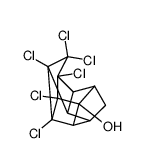
- 33058-12-7
- C12H8Cl6O
- 380.90900
- All (0)
- China (0)
- (0)
![2-[2-hydroxyethyl(tetradecyl)amino]ethanol](https://chemcloud-1304660855.cos.ap-shanghai.myqcloud.com/compound/646107526b314f96afdf50fea56f6788.png?imageMogr2/format/webp)
- 18924-66-8
- C18H39NO2
- 301.51000
- All (0)
- China (0)
- (0)
![Ethanol, 2-[(3-bromophenyl)methoxy]-](https://chemcloud-1304660855.cos.ap-shanghai.myqcloud.com/compound/e7ded56e48464d20b92f2bb0fab6b69d.png?imageMogr2/format/webp)
- 1149358-73-5
- C9H11BrO2
- 231.08600
- All (0)
- China (0)
- (0)
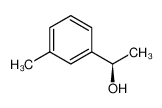
- 42070-91-7
- C9H12O
- 136.19100
- All (0)
- China (0)
- (0)
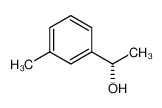
- 51154-53-1
- C9H12O
- 136.19100
- All (0)
- China (0)
- (0)
![Ethanol, 2-[(2,6-dichlorophenyl)Methoxy]-](https://chemcloud-1304660855.cos.ap-shanghai.myqcloud.com/compound/202502112345190892.gif?imageMogr2/format/webp)
- 85309-91-7
- C9H10Cl2O2
- 221.08
- All (0)
- China (0)
- (0)
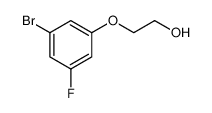
- 1513333-06-6
- C8H8BrFO2
- 235.05000
- All (0)
- China (0)
- (0)
![2-[2-(2-AMINOETHOXY)ETHOXY]ETHANOL](https://chemcloud-1304660855.cos.ap-shanghai.myqcloud.com/compound/202502112313030922.gif?imageMogr2/format/webp)
- 6338-55-2
- C6H15NO3
- 149.19
- All (3)
- China (2)
- (3)
![Ethanol, 2-[(6-methyl-2-pyridinyl)oxy]-](https://chemcloud-1304660855.cos.ap-shanghai.myqcloud.com/compound/228129702066426d9b8611063bec5c50.png?imageMogr2/format/webp)
- 104472-97-1
- C8H11NO2
- 153.17800
- All (0)
- China (0)
- (0)
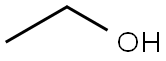
- 64-17-5
- C2H6O
- 46.07
- All (54)
- China (46)
- (54)
Related Products More >

- CNY Request For Quotation
- CNY Request For Quotation
- CNY Request For Quotation
- CNY Request For Quotation
- CNY Request For Quotation
- CNY Request For Quotation
- CNY Request For Quotation
- CNY Request For Quotation
 沪ICP备2021018848号-5


Another big thing alcohol does is change your judgement. It lowers your ability to weigh risks, so you might think speeding a little more or taking a risky turn is no big deal. At the same time, it can give you a false sense of confidence, making you believe you’re driving just as well as when you’re sober, even though you’re not.
It also affects coordination. Simple things like staying in your lane, keeping a steady speed, or checking mirrors properly become harder without you even noticing. That’s why even “just a drink or two” can make a difference—because those small changes stack up and increase the chance of mistakes.
For driving skills, alcohol impairs fine motor control first, affecting abilities like steering precision, brake reaction time, and maintaining a consistent lane position. It also disrupts vestibular and visual processing: the brain’s ability to interpret visual cues (e.g., distance to other vehicles, traffic signals) and integrate them with balance information declines, leading to misjudgments of speed and spatial relationships. Unlike fatigue, which primarily slows reaction time without altering sensory interpretation, alcohol distorts both the input (sensory perception) and output (motor response) of the driving process.
Judgement is compromised by alcohol’s impact on the prefrontal cortex, the brain’s executive function center. This region regulates risk assessment, impulse control, and decision-making—skills essential for evaluating traffic scenarios (e.g., whether to merge, how to respond to a sudden stop). Alcohol reduces activity here, leading to overconfidence, disregard for safety rules (e.g., running red lights), and failure to anticipate hazards. A common 误解 is that “moderate” drinking (e.g., one drink) has no effect, but even low blood alcohol concentrations (BACs) of 0.02–0.03 g/dL can impair judgement, as the prefrontal cortex is highly sensitive to ethanol. This differs from other substances like caffeine, which may improve alertness but does not reverse alcohol’s CNS depression or its specific effects on motor and judgement skills.
In professional terms, understanding this mechanism is critical for traffic safety engineering (e.g., designing detection systems for impaired driving) and public health policy, as it clarifies that no level of alcohol consumption is compatible with safe driving—unlike temporary distractions, which can be mitigated with focus, alcohol’s physiological effects on the brain are unavoidable until the body metabolizes the ethanol.
Would you like me to create a comparative table of alcohol’s effects vs. other driving impairments (e.g., fatigue, distractions) to further clarify key differences?
The physical effects compound these neurological changes. Alcohol impairs proprioception, the body’s ability to sense spatial orientation, making it difficult to maintain lane position or judge distances between vehicles. Fine motor skills deteriorate as ethanol interferes with muscle coordination, causing erratic steering or abrupt braking. From a biomechanical perspective, alcohol’s vasodilatory properties lower core body temperature, potentially inducing drowsiness, while its diuretic effect increases fatigue—both states that exacerbate cognitive decline during prolonged drives.
In daily life, these impairments translate to a 400% higher crash risk at blood alcohol concentrations (BAC) of 0.08%, the legal limit in many regions. Beyond individual safety, impaired driving costs societies billions annually in healthcare expenses and lost productivity. In industrial settings, workers under the influence of alcohol are prone to misjudging machinery operation speeds or ignoring safety protocols, elevating accident rates in sectors like construction or manufacturing. Medically, alcohol’s interference with judgement extends to emergency decision-making; for instance, a driver might delay seeking medical help after a collision due to impaired risk perception.
The broader implications touch on public health ethics and urban planning. Cities must balance alcohol accessibility with transportation infrastructure, such as expanding late-night transit options to reduce drunk driving incentives. Legal frameworks, too, rely on understanding alcohol’s pharmacodynamics—prosecutors use BAC data to quantify impairment, while policymakers design interventions like ignition interlock devices. Ultimately, alcohol’s impact on driving underscores the interconnectedness of neuroscience, law, and social behavior, demanding holistic approaches to mitigate risk in an alcohol-consuming society.