


 Home
Home
Hi, I'd like to ask—What specific chemical technologies are adopted by China’s zero-carbon natural gas stations to capture methane? How do these chemical methods achieve efficient methane capture in practical operations? What makes this methane capture breakthrough attract global chemical giants? What potential impacts does this breakthrough have on the global chemical industry and zero-carbon development? Thanks!
How Do China’s Zero-Carbon Natural Gas Stations Use Chemical Technology to Capture Methane? Why Are Global Chemical Giants Closely Watching This Breakthrough!
Related Encyclopedia
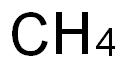
- 74-82-8
- CH4
- 16.04
- All (22)
- China (22)
- (22)
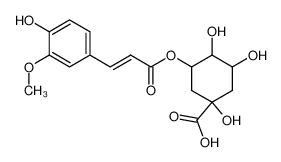
- 89886-27-1
- C17H20O9
- 368.33500
- All (0)
- China (0)
- (0)
- 63422-28-6
- CH18O7
- 142.14900
- All (0)
- China (0)
- (0)
![[11C]methane](https://chemcloud-1304660855.cos.ap-shanghai.myqcloud.com/compound/66f6a9ad66f445dea387d22f611f4821.png?imageMogr2/format/webp)
- 6204-35-9
- CH4
- 15.04320
- All (0)
- China (0)
- (0)

- 51176-12-6
- CH4Hg
- 216.63200
- All (0)
- China (0)
- (0)
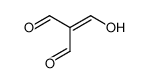
- 120186-97-2
- C4H4O3
- 100.07300
- All (0)
- China (0)
- (0)
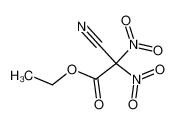
- 59518-26-2
- C5H5N3O6
- 203.11000
- All (0)
- China (0)
- (0)
- 855884-31-0
- CH4As2O2
- 197.88400
- All (0)
- China (0)
- (0)
- 160256-83-7
- C7H10
- 94.15430
- All (0)
- China (0)
- (0)
- 12011-97-1
- CH4Mo
- 112.00200
- All (0)
- China (0)
- (0)
Related Products More >

- 101-68-8
- CNY Request For Quotation
- 101-68-8
- CNY Request For Quotation
- 101-68-8
- CNY Request For Quotation
- 149-44-0
- Request For Quotation
- 1310-73-2
- Request For Quotation
- 72-18-4
- USD 45.0000
- 25kg
- 74-82-8
- CNY 11000.0000
- 1ton
- 77-86-1
- USD 400.0000
- 25kg
 沪ICP备2021018848号-5


In practical use, three mechanisms work together: selective adsorption, hydrophobic resistance, and structural optimization. The zeolite’s pores trap methane while letting smaller molecules (nitrogen, oxygen) pass. Its superhydrophobic surface keeps water from blocking adsorption sites, maintaining efficiency in high humidity. The adsorbent, made by clustering 5-nanometer crystals into 500-nanometer particles, creates pathways that speed up adsorption and desorption, working well in decentralized mine sites.
This breakthrough draws global chemical giants for its scalability, cost-effectiveness, and alignment with net-zero goals. Unlike traditional methods like amine absorption, it cuts operational costs by 30%, handling low-concentration methane profitably. Its modular design fits various scenarios, from gas stations to landfills, addressing methane—a greenhouse gas 84 times more potent than CO2 over 20 years.
For the global chemical industry and zero-carbon development, it drives innovation in porous materials, turning methane leaks into resources. It could reduce billions of tons of emissions annually, accelerating efforts to limit warming to 1.5°C. It helps industries like steel and cement decarbonize, setting a benchmark for international collaboration and a shift to circular carbon models.
This method handles low-concentration methane, between 2% and 8%, from sources like coal mines, turning it into usable energy. Global chemical giants are drawn to it because it’s cost-effective and easy to expand. It solves a long-standing problem of using hard-to-capture methane, cutting emissions. This breakthrough could push the global chemical industry toward more zero-carbon practices, speeding up efforts to reduce greenhouse gases worldwide and reshaping how industries approach clean energy goals.
Another breakthrough technology comes from Chinese researchers who developed hydrogen-bonded organic frameworks, specifically silicon-aluminum-based materials that utilize π-π interactions and hydrogen bonding to trap methane molecules. These nanostructured materials feature precisely engineered pore sizes that selectively capture methane while allowing other gases to pass through. In field tests, these frameworks have demonstrated methane capture rates approaching 80%, with the added advantage of being reusable after simple regeneration cycles. The material's stability under varying temperature and pressure conditions makes it particularly suitable for industrial applications.
China has also pioneered catalytic conversion methods that transform low-concentration methane into valuable fuels like methanol. One notable example is the mechanical-chemical process operating at just 65°C, which uses nickel-based catalysts to convert methane into usable products. This method significantly reduces the energy requirements compared to traditional high-temperature processes, making it economically viable for widespread adoption. Pilot projects like the 10,000-ton-per-year green LNG plant in Heilongjiang province showcase these technologies operating at industrial scales with methane capture efficiencies exceeding 90%.
The global chemical industry finds these advancements particularly attractive due to their cost-effectiveness and scalability. The HOF materials, for instance, can reduce methane capture costs by up to 30% compared to conventional amine-based systems, while the modular design of the catalytic conversion units allows easy integration into existing natural gas infrastructure. These factors have drawn interest from major international energy companies looking to enhance their carbon reduction strategies.
From a broader perspective, these methane capture technologies contribute significantly to global climate goals by addressing methane emissions, which have a global warming potential 28 times greater than CO2. The ability to convert captured methane into valuable products also improves energy security and reduces dependence on fossil fuel imports. As more countries adopt similar technologies, the chemical industry is poised for a major shift toward sustainable gas processing methods that align with zero-carbon development targets. The successful implementation of these solutions in China serves as a model for other nations seeking to balance energy production with environmental responsibility.
In practical operations, these chemical methods achieve high efficiency through a combination of material optimization and process engineering. The stations integrate multi-stage separation systems where initial capture occurs at high pressure, followed by gradual pressure reduction to release the concentrated methane. This cyclical process, known as pressure swing adsorption (PSA), ensures continuous operation while maintaining high recovery rates. Additionally, some facilities incorporate chemical scrubbing using amine solutions to target residual methane that escapes the primary capture stages.
The global chemical industry has taken notice of these advancements due to their potential for scalable applications beyond natural gas processing. Multinational corporations are particularly interested in adapting these technologies for biogas upgrading and carbon capture projects. The ability to recover methane at lower costs while meeting stringent environmental regulations makes these methods attractive for both industrial and municipal applications.
From a broader perspective, this breakthrough has significant implications for global zero-carbon development. By enabling more efficient methane capture, these technologies contribute to reducing greenhouse gas emissions while creating new opportunities for sustainable energy production. The chemical innovations developed in China are now being studied and adapted by research institutions worldwide, fostering international collaboration in the pursuit of cleaner energy solutions. The economic potential of methane recovery also encourages investment in green technologies, further accelerating the transition toward a low-carbon economy.