


 Home
Home
Hi, I’m trying to figure out how to properly dilute hydrogen peroxide for everyday household uses. I’ve seen different percentages in stores, but I’m not sure how much water I should add to make it safe for cleaning or gardening. Is there a simple way to measure and mix it correctly without risking too strong or too weak a solution? Can anyone explain the right method for diluting it safely at home?
Practical Tips: How Do I Dilute Hydrogen Peroxide Safely at Home
Related Encyclopedia

- 14691-59-9
- HO2-
- 33.00670
- All (0)
- China (0)
- (0)
- 32113-92-1
- HOT
- 22.02320
- All (50)
- China (13)
- (50)
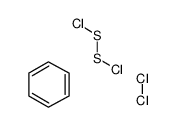
- 109037-76-5
- C6H6.Cl2.Cl12S2
- 284.06000
- All (0)
- China (0)
- (0)

- 61971-47-9
- C4H2O6Tl2
- 554.82168
- All (4)
- China (3)
- (4)
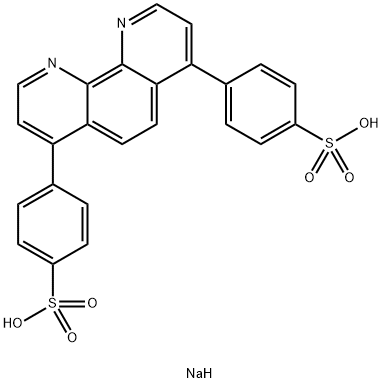
- 53744-42-6
- C24H17N2NaO6S2
- 516.52
- All (3)
- China (0)
- (3)
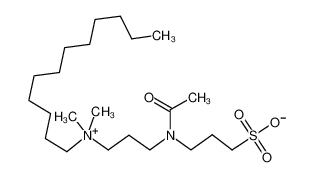
- 103683-20-1
- C22H46N2O4S
- 434.68100
- All (0)
- China (0)
- (0)
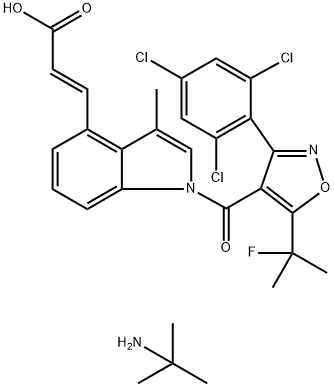
- 1898207-64-1
- C29H29Cl3FN3O4
- 608.92
- All (0)
- China (0)
- (0)
- 12325-19-8
- H2O-
- 19.02320
- All (0)
- China (0)
- (0)
- 95690-30-5
- H2O4S
- 98.07850
- All (0)
- China (0)
- (0)
- 263339-67-9
- GaH2O
- 87.73830
- All (0)
- China (0)
- (0)
Related Products More >

- CNY Request For Quotation
- CNY Request For Quotation
- 75-56-9
- Request For Quotation
- Request For Quotation
- 1310-73-2
- Request For Quotation
- 9003-05-8
- USD 30.0000
- 25kg
- 9003-05-8
- USD 30.0000
- 25kg
- 1336-21-6
- CNY 500.0000
- 1ton
 沪ICP备2021018848号-5


For gardening or minor disinfecting, a similar approach works—just remember that stronger concentrations can harm plants or surfaces. A light solution applied with a spray bottle is usually enough to handle mildew or sanitize small areas. Just shake the bottle gently to mix and use it right away, as diluted hydrogen peroxide loses strength over time. It’s easy to manage once you get the hang of the ratios.
The first step in dilution is identifying the starting concentration and desired end concentration, then calculating the ratio of H₂O₂ to water using a simple formula: (Starting Concentration × Volume of H₂O₂) = (Desired Concentration × Total Final Volume). For example, to dilute 35% food-grade H₂O₂ to the common 3% household concentration (used for cleaning or mouth rinses), mix 1 part 35% H₂O₂ with approximately 10.7 parts water (since 35 ÷ 3 ≈ 11.7 total parts, minus 1 part H₂O₂ equals 10.7 parts water). For even milder uses—like treating plant root rot or cleaning delicate fabrics—a 1% solution is ideal, requiring 1 part 3% H₂O₂ mixed with 2 parts water. It is critical to use clean, non-reactive containers (e.g., glass or high-density polyethylene) for dilution, as metal containers can catalyze H₂O₂ decomposition, releasing oxygen gas and reducing its effectiveness. Additionally, always add H₂O₂ to water (not the reverse), as pouring water into concentrated H₂O₂ can cause splashing due to rapid oxygen release, increasing the risk of skin or eye contact. From a safety standpoint, wearing gloves and eye protection during dilution is essential, especially with high-concentration solutions, to prevent irritation from accidental spills.
Beyond household use, proper H₂O₂ dilution is vital in industrial, medical, and agricultural settings, where precision directly impacts safety and performance. In medical facilities, 3% H₂O₂ may be further diluted to 0.5% for use as a mild antiseptic in sensitive areas (e.g., oral mucosa), as higher concentrations can damage healthy tissue. In commercial agriculture, 35% H₂O₂ is diluted to 0.5–1% to treat powdery mildew on crops, balancing fungal control with plant safety. Industrial applications, such as wastewater treatment, require precise dilution to 5–10% H₂O₂ to ensure it breaks down contaminants without corroding pipes or harming aquatic life. From an environmental perspective, correct dilution ensures that any excess H₂O₂ decomposes into harmless water and oxygen, avoiding the oxidative stress that concentrated solutions can impose on soil or waterways. This cross-disciplinary focus—integrating chemistry, safety protocols, and applied science—emphasizes that dilution is not just a practical step but a critical one that aligns H₂O₂’s properties with its intended use, ensuring effectiveness while minimizing risks to humans, plants, and the environment.
The chemical principle behind dilution is straightforward: the amount of active peroxide in the solution per unit volume is reduced, which moderates its oxidative strength and decreases the risk of tissue irritation or surface damage. This principle is widely applied in both laboratory and practical scenarios. In horticulture, diluted hydrogen peroxide can be sprayed on seedlings to reduce fungal growth without harming the plants. Similarly, in dentistry, a properly diluted solution can serve as a mouth rinse to manage bacteria safely.
It’s essential to handle the concentrated forms with protective equipment like gloves and goggles, and to store any diluted solutions in opaque containers to prevent breakdown from light exposure. Once diluted, hydrogen peroxide gradually loses potency, so preparing only what is needed for immediate use is a practical approach. By understanding the relationship between concentration and activity, you can safely adjust hydrogen peroxide for tasks ranging from sanitation to plant care.
The dilution process involves volumetric mixing, typically using distilled or deionized water to avoid introducing impurities that accelerate decomposition. For example, to create a 3% solution from 30% H₂O₂, a 1:9 ratio of H₂O₂ to water is required (1 part H₂O₂ + 9 parts water). This differs from weight-based dilution, which accounts for density variations between concentrations (e.g., 30% H₂O₂ has a density of ~1.11 g/mL, while 3% is ~1.00 g/mL). In industrial settings, automated dilution systems use flow meters and pH sensors to ensure precision, but manual methods rely on graduated cylinders or syringes for accuracy.
A common misconception is that tap water can substitute for purified water. Chlorine and minerals in tap water act as catalysts, destabilizing H₂O₂ and reducing shelf life. Additionally, over-dilution (e.g., creating a 1% solution for disinfection) may render H₂O₂ ineffective against pathogens like Pseudomonas aeruginosa, which require ≥3% concentration for reliable sporicidal activity. Always label diluted solutions with the date and concentration, and discard them if bubbling or cloudiness indicates decomposition. For critical applications (e.g., medical sterilization), use certified calibration standards to verify concentration post-dilution.