


 Home
Home
Hi, I’ve been drinking heavily for a while and my doctor mentioned I might have alcohol-induced anemia. I’m worried about whether this condition can actually get better or if the damage is permanent. Can stopping drinking improve my blood counts? Are there specific vitamins or foods that help recovery, and how quickly might I start feeling stronger and less tired? Basically, I want to know if it’s possible to reverse the effects of alcohol on my red blood cells and regain normal health.
Can Alcohol-Induced Anemia Be Reversed and How Long Does It Take?
Related Encyclopedia
- 9008-02-0
- C13H10N2O2
- 226.2307
- All (1)
- China (0)
- (1)
![2-[2-hydroxyethyl(tetradecyl)amino]ethanol](https://chemcloud-1304660855.cos.ap-shanghai.myqcloud.com/compound/646107526b314f96afdf50fea56f6788.png?imageMogr2/format/webp)
- 18924-66-8
- C18H39NO2
- 301.51000
- All (0)
- China (0)
- (0)
![Ethanol, 2-[(3-bromophenyl)methoxy]-](https://chemcloud-1304660855.cos.ap-shanghai.myqcloud.com/compound/e7ded56e48464d20b92f2bb0fab6b69d.png?imageMogr2/format/webp)
- 1149358-73-5
- C9H11BrO2
- 231.08600
- All (0)
- China (0)
- (0)
- 42070-91-7
- C9H12O
- 136.19100
- All (0)
- China (0)
- (0)
- 51154-53-1
- C9H12O
- 136.19100
- All (0)
- China (0)
- (0)
![Ethanol, 2-[(2,6-dichlorophenyl)Methoxy]-](https://chemcloud-1304660855.cos.ap-shanghai.myqcloud.com/compound/202502112345190892.gif?imageMogr2/format/webp)
- 85309-91-7
- C9H10Cl2O2
- 221.08
- All (0)
- China (0)
- (0)
- 1513333-06-6
- C8H8BrFO2
- 235.05000
- All (0)
- China (0)
- (0)
![2-[2-(2-AMINOETHOXY)ETHOXY]ETHANOL](https://chemcloud-1304660855.cos.ap-shanghai.myqcloud.com/compound/202502112313030922.gif?imageMogr2/format/webp)
- 6338-55-2
- C6H15NO3
- 149.19
- All (3)
- China (2)
- (3)
![Ethanol, 2-[(6-methyl-2-pyridinyl)oxy]-](https://chemcloud-1304660855.cos.ap-shanghai.myqcloud.com/compound/228129702066426d9b8611063bec5c50.png?imageMogr2/format/webp)
- 104472-97-1
- C8H11NO2
- 153.17800
- All (0)
- China (0)
- (0)
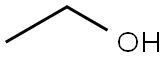
- 64-17-5
- C2H6O
- 46.07
- All (54)
- China (46)
- (54)
Related Products More >

- 68890-66-4
- CNY Request For Quotation
- 68890-66-4
- CNY Request For Quotation
- 108-01-0
- Request For Quotation
- 64-17-5
- Request For Quotation
- 111-76-2
- Request For Quotation
- 110-80-5
- Request For Quotation
- 67-56-1
- Request For Quotation
- 67-56-1
- CNY 2400.0000
- 1ton
 沪ICP备2021018848号-5


Once alcohol is removed, your body gradually starts making healthy red blood cells again. Eating iron-rich foods like meat, leafy greens, and eggs, along with vitamins like B12 and folate, can speed up recovery. Some people also need supplements if their levels are very low. You might notice feeling less tired and more energetic after a few weeks, but full recovery can take a couple of months depending on how severe the anemia was and how well your diet supports blood health.
The key takeaway is that your body has a strong ability to heal, but it needs the right conditions—less alcohol, good nutrition, and sometimes extra medical support. Keeping up with doctor visits and blood tests helps track progress and ensures you’re on the right path to reversing anemia.
Ethanol’s impact on nutrient absorption is particularly relevant in real-world scenarios. For instance, chronic drinkers often have folate deficiency because alcohol inhibits its intestinal uptake and alters liver storage. Iron deficiency can occur due to gastritis or minor gastrointestinal bleeding, which is also more common in individuals with heavy alcohol use. Bone marrow suppression means that even if nutrients are adequate, red blood cell production may remain insufficient until alcohol intake is reduced or stopped. Clinicians often assess both dietary status and liver function to determine how aggressively to intervene with supplementation or supportive care.
In practice, reversing alcohol-induced anemia usually requires a combination of interventions. Stopping or significantly reducing alcohol intake allows bone marrow activity to normalize over time, while replenishing iron, folate, and B12 helps rebuild red blood cells efficiently. A practical example would be a patient who eliminates alcohol and begins a diet rich in lean meats, leafy greens, and fortified cereals; over several weeks to months, their hemoglobin and hematocrit levels can gradually return to normal. The timeframe depends on severity, baseline nutritional status, and adherence to lifestyle changes, highlighting that while reversal is possible, it requires sustained effort and monitoring.
This integrative approach demonstrates the interplay between metabolic pathways, nutrient availability, and lifestyle factors in the recovery process. Patients who combine alcohol abstinence with targeted nutritional support often see measurable improvement in both laboratory markers and clinical symptoms within months.
In practical terms, reversing alcohol-induced anemia begins with modifying alcohol consumption, as continued intake will perpetuate bone marrow suppression and nutrient depletion regardless of other interventions. For individuals with mild to moderate anemia, abstaining from alcohol for 1–3 months allows the bone marrow to recover: erythroid progenitor cells resume normal division, and the body can utilize stored or supplemented iron and B vitamins to produce new, healthy red blood cells. Nutritional support is often integral to this process: oral iron supplements (for iron-deficiency components of the anemia) and B vitamin supplements (particularly folate and B12) help correct deficiencies, while a balanced diet rich in iron (e.g., red meat, leafy greens), vitamin B12 (e.g., fish, dairy), and folate (e.g., legumes, fortified grains) sustains long-term recovery. In severe cases—such as when anemia leads to symptoms like extreme fatigue, shortness of breath, or chest pain, or when alcohol has caused liver damage (which impairs iron storage and metabolism)—medical intervention may be necessary, including intravenous iron infusions or B vitamin injections to rapidly replenish levels. Daily life during recovery often involves adjusting routines to accommodate increased rest (as anemia causes fatigue) and adhering to dietary changes, which can require support from healthcare providers or nutritionists to ensure compliance, especially for individuals with long-standing alcohol dependence who may need additional resources to maintain abstinence.
From an interdisciplinary perspective, the reversibility of alcohol-induced anemia highlights connections between toxicology, nutrition, hematology, and public health, offering insights into how lifestyle modifications can counteract drug-induced physiological damage. For hematologists, it demonstrates the resilience of the bone marrow: unlike some forms of anemia caused by genetic mutations or chronic diseases, alcohol-induced anemia is not a permanent disruption of hematopoietic function, but rather a transient impairment that responds to environmental changes. In public health, it underscores the importance of education and early intervention: raising awareness about the link between alcohol and anemia can encourage individuals with heavy drinking habits to seek screening, while providing access to addiction counseling and nutritional support services can improve recovery outcomes, particularly for vulnerable populations (e.g., individuals experiencing homelessness, those with mental health conditions) who may face barriers to care. For the food and beverage industry, it indirectly informs discussions about responsible alcohol consumption, as part of broader efforts to mitigate the health impacts of excessive drinking. Additionally, this condition illustrates the interconnectedness of bodily systems: alcohol’s effect on the liver (iron storage), gastrointestinal tract (nutrient absorption), and bone marrow (red blood cell production) shows how a single substance can disrupt multiple physiological pathways, and how addressing each pathway—through abstinence, nutrition, and medical care—works in tandem to restore health. This holistic approach to reversal not only treats anemia but also addresses underlying alcohol-related health risks, supporting overall well-being beyond just red blood cell count.
Unlike nutritional anemias, where deficiencies in iron, vitamin B12, or folate can be corrected with supplementation, alcohol-induced anemia often involves multifactorial dysfunction. Chronic alcohol use disrupts hepatic iron regulation, leading to paradoxical iron overload in macrophages despite reduced serum iron availability for erythropoiesis. This differs from hereditary hemochromatosis, where iron accumulation occurs due to genetic mutations in hepcidin pathways. Furthermore, alcohol suppresses the absorption of dietary nutrients essential for RBC synthesis, such as folate, by damaging the gastrointestinal mucosa and altering gut microbiota composition.
A common misconception is that abstinence alone can fully reverse alcohol-induced anemia. While cessation of alcohol intake halts further hematopoietic suppression and oxidative damage, recovery depends on addressing residual deficiencies and tissue repair. Supplementation with iron, B vitamins, and antioxidants like N-acetylcysteine may accelerate healing, but the timeline varies based on the duration and severity of alcohol abuse. Unlike aplastic anemia, where bone marrow failure is irreversible, alcohol-induced anemia is often reversible with sustained abstinence and nutritional support, highlighting the importance of early intervention to prevent permanent hematopoietic dysfunction.