


 Home
Home
I’ve heard about calcium carbide being used in different things like making acetylene gas or even in some fruit-ripening methods. But I’m curious, how exactly is calcium carbide made? Is it something that can be done with simple materials, or does it need special equipment and conditions? What should someone know before trying to make it, and are there safety concerns involved that I might not be aware of? How do people normally produce it in a way that’s safe and practical?
How To Make Calcium Carbide Safely At Home?
Related Encyclopedia
- 934488-77-4
- C60H80BF2N5O12
- 1112.11000
- All (0)
- China (0)
- (0)
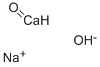
- 8006-28-8
- CaHNaO2
- 96.07
- All (1)
- China (1)
- (1)
- 141219-98-9
- C36
- 432.38500
- All (95)
- China (15)
- (95)

- 74-86-2
- C2H2
- 26.04
- All (5)
- China (5)
- (5)
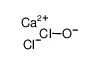
- 15944-13-5
- CaCl2O
- 126.98300
- All (0)
- China (0)
- (0)
- 934488-80-9
- C63H81BF2N6O14
- 1195.16000
- All (0)
- China (0)
- (0)
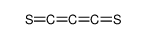
- 627-34-9
- C3S2
- 100.16200
- All (0)
- China (0)
- (0)

- 91948-87-7
- C3H3
- 39.05590
- All (0)
- China (0)
- (0)

- 84654-89-7
- CH2N
- 28.03330
- All (0)
- China (0)
- (0)

- 14067-05-1
- C+
- 12.01070
- All (0)
- China (0)
- (0)
Related Products More >

- CNY Request For Quotation
- CNY Request For Quotation
- CNY Request For Quotation
- 112945-52-5
- Request For Quotation
- 7440-44-0
- Request For Quotation
- Request For Quotation
- 616-38-6
- CNY 3500.0000
- 1ton
- 124-38-9
- CNY 2500.0000
- 1ton
 沪ICP备2021018848号-5


The chemical and physical properties of calcium carbide make it valuable across multiple domains. In industry, it is mainly used to generate acetylene gas for welding and cutting metals, where the gas serves as a high-energy fuel capable of producing extremely hot flames. Additionally, calcium carbide has been applied in the synthesis of organic chemicals such as vinyl acetylene, which is a precursor in polymer production. Its reactivity with water also historically led to its use in carbide lamps, where controlled hydrolysis produces light in remote or underground settings. Beyond industrial applications, its ability to release acetylene has influenced agricultural practices, for instance, in controlled fruit ripening under careful regulation.
From a mechanistic standpoint, the interaction of calcium carbide with water is a simple hydrolysis reaction: CaC₂ + 2H₂O → C₂H₂ + Ca(OH)₂. This reaction demonstrates both the energy stored in chemical bonds and the principle of reactivity modulation through simple compounds. Cross-disciplinary implications arise when considering its role in energy, materials science, and chemical engineering. Handling calcium carbide safely requires understanding its moisture sensitivity and flammability, which has led to strict protocols in industrial production and storage, highlighting the intersection of chemistry with occupational safety and regulatory frameworks.
Calcium carbide’s broader significance extends to economic and technological dimensions. By facilitating the production of acetylene, it indirectly supports industries ranging from metallurgy to synthetic polymer manufacturing. It serves as an example of how a relatively simple binary compound can underpin complex industrial processes while requiring careful chemical management. Understanding calcium carbide involves not just its preparation and reactions, but also its practical integration into modern technology and its influence on safety standards and industrial efficiency.
The defining property of calcium carbide is its reactivity with water, which hydrolyzes it to produce acetylene gas, a crucial industrial fuel and chemical feedstock. This key attribute directly links its production to applications in metal cutting and welding, where acetylene’s high flame temperature is indispensable. For instance, in oxy-acetylene torches, the gas enables precise cutting of steel plates and welding of metallic components in construction and manufacturing. The reaction’s mechanism involves the nucleophilic attack of water on the electrophilic carbon in the CaC₂ matrix, releasing acetylene and calcium hydroxide.
Beyond metalworking, calcium carbide functions as a potent reducing agent and a rapid source of acetylene in controlled environments. In some regions, it is used in carbide lamps for mining or caving, where its portable reaction with water generates a bright flame. The production quality is judged by the gas yield per unit of carbide, which depends on the purity of the raw materials and the efficiency of the furnace operation. Proper particle size and low impurity levels in coke and lime are critical for optimal conversion and minimal energy waste.
In industrial contexts, calcium carbide holds pivotal importance due to its role as a precursor for acetylene (C₂H₂) production, a versatile chemical building block. When reacted with water, calcium carbide undergoes a vigorous exothermic reaction: CaC₂ + 2H₂O → C₂H₂↑ + Ca(OH)₂. Acetylene derived from this process is used in oxy-acetylene welding and cutting, where its combustion produces temperatures exceeding 3000°C, far higher than those achievable with other fuel gases like propane. Beyond metallurgy, acetylene serves as a feedstock in the synthesis of vinyl chloride (for PVC production), acrylonitrile (for synthetic fibers), and various organic chemicals, making calcium carbide an indirect but critical component of the plastics and polymer industries. It also finds niche applications, such as in carbide lamps—historically used in mining—and as a ripening agent for fruits, though the latter is regulated in many regions due to safety concerns.
A key distinction between calcium carbide and other carbides (e.g., silicon carbide, SiC; tungsten carbide, WC) lies in both their structure and reactivity. Unlike the covalent network structures of SiC and WC, which are extremely hard and chemically inert, CaC₂ has an ionic lattice that renders it highly reactive with polar molecules like water. This reactivity is why calcium carbide must be stored in airtight, moisture-proof containers to prevent degradation. Another common point of confusion is its relationship to calcium carbonate (CaCO₃); while both contain calcium and carbon, CaCO₃ is a stable carbonate mineral (found in limestone), whereas CaC₂ is a reactive carbide that must be manufactured through high-temperature processes, with no natural occurrence.
One prevalent misconception is that calcium carbide’s use in fruit ripening is inherently safe, but the reality is that impure CaC₂ often contains traces of arsenic and phosphorus, which can contaminate fruits and pose health risks when consumed. Additionally, the acetylene gas produced during ripening is flammable, creating fire hazards in poorly ventilated storage areas. Another misunderstanding is underestimating the energy intensity of its production: the electric arc furnaces require large amounts of electricity, making calcium carbide production costly in regions with high power prices and contributing to significant carbon emissions if the electricity is derived from fossil fuels. This energy dependency also distinguishes it from other chemical precursors that can be synthesized via lower-temperature, more energy-efficient routes.