


 Home
Home
Have you ever wondered why certain substances dissolve easily in water while others don’t? Specifically, why does benzoic acid, a chemical you might find in food preservatives or household products, mix with water instead of staying separate? What is it about its structure that allows it to break down and spread out in water? And how does this solubility affect the way we use it in kitchens, laboratories, or even medicine? Could understanding this property help in everyday handling or storage of products containing benzoic acid?
Why Is Benzoic Acid Soluble in Water?
Related Encyclopedia
![2-[(3-chlorophenyl)carbamoyl]benzoic acid](https://chemcloud-1304660855.cos.ap-shanghai.myqcloud.com/compound/ce5b704f486f4611be7abdda10da766f.png?imageMogr2/format/webp)
- 5406-21-3
- C14H10ClNO3
- 275.69000
- All (0)
- China (0)
- (0)
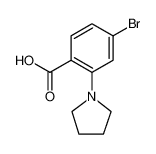
- 1099609-12-7
- C11H12BrNO2
- 270.12200
- All (0)
- China (0)
- (0)
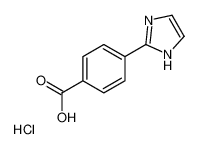
- 210962-27-9
- C10H9ClN2O2
- 224.64400
- All (0)
- China (0)
- (0)
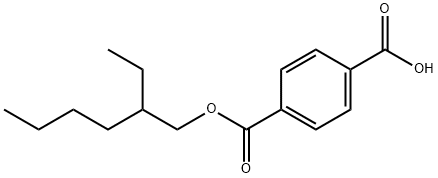
- 155603-50-2
- C16H22O4
- 278.34
- All (0)
- China (0)
- (0)
![Benzoic acid, 4-[(4-methyl-1-piperidinyl)methyl]-, hydrochloride (1:1)](https://chemcloud-1304660855.cos.ap-shanghai.myqcloud.com/compound/6f85e713afc749b483c90ab9d82d8367.png?imageMogr2/format/webp)
- 1158215-50-9
- C14H20ClNO2
- 269.76700
- All (0)
- China (0)
- (0)
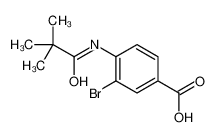
- 139058-18-7
- C12H14BrNO3
- 300.15000
- All (0)
- China (0)
- (0)
- 55320-26-8
- C7H6O2
- 123.13000
- All (410)
- China (38)
- (410)
- 19207-88-6
- C9H12O3S
- 200.25500
- All (0)
- China (0)
- (0)
- 171507-42-9
- C20H19NO2
- 305.37000
- All (0)
- China (0)
- (0)
- 12002-27-6
- C28H16Cl8O8
- 764.04600
- All (0)
- China (0)
- (0)
Related Products More >

- CNY Request For Quotation
- CNY Request For Quotation
- CNY Request For Quotation
- 100-09-4
- 1.0000
- GlassBottlekg
- 88071-90-3
- Request For Quotation
- 25kg/drum25kg/drum
- 606-18-8
- USD 1.0000
- 25kg
- 99548-54-6
- Request For Quotation
- 99548-54-6
- Request For Quotation
 沪ICP备2021018848号-5


From a physical and chemical perspective, solubility depends on the ability of solute molecules to overcome their own intermolecular forces and interact favorably with solvent molecules. In the case of benzoic acid, water’s polarity is sufficient to disrupt some of the hydrogen bonding in the solid lattice, allowing individual molecules to enter the solution. Temperature also influences solubility; higher temperatures provide the energy needed for more molecules to escape the solid state, which is particularly relevant in industrial applications such as crystallization, extraction, and chemical synthesis.
In practical contexts, the water solubility of benzoic acid has implications across multiple fields. In food preservation, its solubility allows it to act effectively in acidic beverages and preserves, inhibiting microbial growth. In pharmaceuticals, this property facilitates formulation in liquid medications or topical solutions, where uniform distribution ensures consistent efficacy. Laboratory use also leverages solubility for analytical purposes, purity testing, and controlled reactions. Environmental considerations are influenced as well, as partially soluble compounds interact with water systems differently than fully soluble or insoluble chemicals, affecting transport, bioavailability, and degradation.
The interdisciplinary significance of benzoic acid’s solubility connects molecular behavior with real-world utility. Understanding the molecular interactions responsible for solubility informs decisions in manufacturing, storage, and application across food science, medicine, and chemical engineering. These insights not only enhance practical efficiency but also highlight the broader relationship between chemical structure, physical properties, and functional performance.
The solubility is not static but is profoundly influenced by the pH of the aqueous environment. In neutral or acidic conditions, solubility remains low because the majority of molecules exist in their neutral, non-ionic form. The principle mechanism for enhanced dissolution occurs in basic environments, where the acid group undergoes deprotonation to form the benzoate anion. This ionic species possesses a full negative charge, dramatically increasing its polarity and its ability to form even stronger ion-dipole interactions with water, leading to a substantial boost in solubility.
This pH-dependent solubility is a cornerstone of its practical application, particularly as a preservative in the food and beverage industry. By adjusting the pH of a product to be slightly alkaline, manufacturers can effectively dissolve benzoic acid before later re-acidifying the formulation to release the active antimicrobial form. This same principle is harnessed in organic chemistry laboratories for separation and purification; benzoic acid can be selectively extracted into an aqueous basic solution from a mixture with non-acidic, water-insoluble compounds, demonstrating a direct link between molecular property and practical technique.
While benzoic acid is soluble in water, its solubility is relatively low at room temperature (approximately 3.4 g/L) compared to fully polar compounds like acetic acid (miscible in all proportions) or ionic compounds like sodium chloride. This limited solubility arises because the nonpolar benzene ring dominates the molecule’s overall character, leading to hydrophobic interactions that resist mixing with polar water. In contrast, sodium benzoate—the sodium salt of benzoic acid—exhibits much higher water solubility (around 620 g/L) because it dissociates into ions (sodium cations and benzoate anions) in water, and these charged species are strongly solvated by water molecules through ion-dipole interactions, overcoming the hydrophobic effect of the benzene ring. This difference in solubility is critical in industries like food preservation, where sodium benzoate is preferred over benzoic acid for aqueous products like soft drinks, while benzoic acid finds use in oil-based formulations where its lower water solubility is advantageous.
A common misunderstanding is that benzoic acid’s solubility is purely a function of its polar group, but temperature plays a significant role in enhancing it. As temperature increases, the kinetic energy of water and benzoic acid molecules disrupts the hydrophobic interactions between benzene rings, allowing more hydrogen bonding to occur between the -COOH groups and water. For example, at 100°C, benzoic acid’s solubility in water rises to roughly 56 g/L, a dramatic increase that makes hot water a useful solvent for recrystallization—a purification technique where impure benzoic acid is dissolved in hot water, filtered to remove insoluble impurities, and then cooled to precipitate pure crystals as solubility decreases. This temperature-dependent solubility also distinguishes benzoic acid from compounds with constant solubility across temperature ranges, such as certain inorganic salts, and informs its handling in laboratory and industrial purification processes.
In biological and pharmaceutical contexts, understanding benzoic acid’s solubility is essential for its role as a preservative and active ingredient. In the human body, benzoic acid is metabolized in the liver to hippuric acid, which is water-soluble and excreted in urine—a process that relies on the initial solubility of benzoic acid in bodily fluids to reach the liver. In pharmaceutical formulations, formulators may adjust pH to enhance solubility: when the pH is raised above benzoic acid’s pKa (4.2), the carboxylic acid group deprotonates to form the benzoate anion, increasing solubility and allowing for higher concentrations in liquid medications. This pH-solubility relationship is not unique to benzoic acid but is a general property of weak acids, though its specific pKa and solubility profile make it particularly suitable for applications where mild preservation is needed without excessive solubility that might dilute active ingredients.