


 Home
Home
People often wonder about the behavior of everyday chemicals, and benzoic acid is one that comes up a lot. You might have seen it in preservatives or even in some DIY science projects. But how does it behave when you mix it with methanol? Can it dissolve easily, or does it just sit there like sand in water? Understanding this could help whether you’re curious about chemistry at home, trying to make a solution for an experiment, or just learning about common substances. So, is benzoic acid actually soluble in methanol?
Is Benzoic Acid Soluble in Methanol?
Related Encyclopedia
![2-[(3-chlorophenyl)carbamoyl]benzoic acid](https://chemcloud-1304660855.cos.ap-shanghai.myqcloud.com/compound/ce5b704f486f4611be7abdda10da766f.png?imageMogr2/format/webp)
- 5406-21-3
- C14H10ClNO3
- 275.69000
- All (0)
- China (0)
- (0)
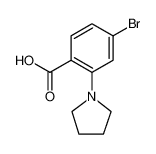
- 1099609-12-7
- C11H12BrNO2
- 270.12200
- All (0)
- China (0)
- (0)
![[4-[(E)-2-(5,5,8,8-tetramethyl-6,7-dihydronaphthalen-2-yl)prop-1-enyl]phenyl]methanol](https://chemcloud-1304660855.cos.ap-shanghai.myqcloud.com/compound/50d21f6fcaa34dec91920183ac1c1739.png?imageMogr2/format/webp)
- 71441-30-0
- C24H30O
- 334.49400
- All (0)
- China (0)
- (0)
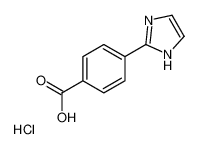
- 210962-27-9
- C10H9ClN2O2
- 224.64400
- All (0)
- China (0)
- (0)
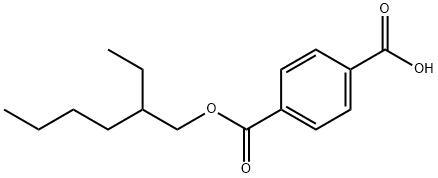
- 155603-50-2
- C16H22O4
- 278.34
- All (0)
- China (0)
- (0)
![Benzoic acid, 4-[(4-methyl-1-piperidinyl)methyl]-, hydrochloride (1:1)](https://chemcloud-1304660855.cos.ap-shanghai.myqcloud.com/compound/6f85e713afc749b483c90ab9d82d8367.png?imageMogr2/format/webp)
- 1158215-50-9
- C14H20ClNO2
- 269.76700
- All (0)
- China (0)
- (0)
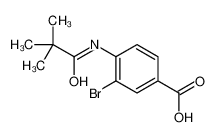
- 139058-18-7
- C12H14BrNO3
- 300.15000
- All (0)
- China (0)
- (0)
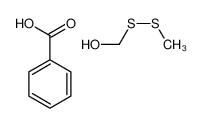
- 89024-29-3
- C9H12O3S2
- 232.32000
- All (0)
- China (0)
- (0)
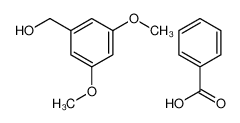
- 138250-67-6
- C16H18O5
- 290.31100
- All (0)
- China (0)
- (0)
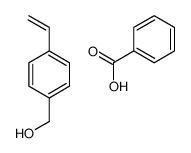
- 67738-95-8
- C16H16O3
- 256.29600
- All (0)
- China (0)
- (0)
Related Products More >
- CNY Request For Quotation
- CNY Request For Quotation
- CNY Request For Quotation
- 67-56-1
- Request For Quotation
- 67-56-1
- CNY 2400.0000
- 1ton
- 100-09-4
- 1.0000
- GlassBottlekg
- 1883-75-6
- Request For Quotation
- 1kg
 沪ICP备2021018848号-5


The miscibility of methanol with a wide range of organic and aqueous phases makes it an exceptionally useful solvent for handling benzoic acid in practical scenarios. For example, in analytical chemistry, methanol is frequently employed to prepare stock solutions of benzoic acid for subsequent analysis via techniques like High-Performance Liquid Chromatography (HPLC). The solvent's ability to dissolve the acid completely ensures accurate calibration and quantification when testing for preservative levels in food products or monitoring pharmaceutical formulations.
Furthermore, this high solubility is exploited in purification and recrystallization processes. A hot methanol solution can dissolve crude benzoic acid, and upon cooling, the compound crystallizes out, leaving impurities behind in the mother liquor. This method is particularly effective due to the significant difference in benzoic acid's solubility in methanol at high versus low temperatures. Such a process is crucial in manufacturing industries to obtain the high-purity grade required for benzoic acid's use in everything from food preservation to the synthesis of more complex chemical derivatives.
In organic synthesis, the solubility of benzoic acid in methanol is exploited for esterification reactions, where benzoic acid reacts with methanol (often in the presence of a strong acid catalyst like sulfuric acid) to form methyl benzoate, an ester used in fragrances and as a solvent. The high solubility ensures that both reactants are in the same phase, increasing the frequency of molecular collisions and driving the reaction forward. This stands in contrast to reactions involving water, where benzoic acid’s low solubility would limit reactant contact and slow the process. Methanol’s role as both solvent and reactant in this context is unique compared to other solvents like ethanol, where the product would be ethyl benzoate instead—though benzoic acid is also soluble in ethanol, methanol’s lower molecular weight and slightly different polarity can affect reaction rates and yields, making it the preferred choice for methyl benzoate synthesis.
A common misconception is that benzoic acid’s solubility in methanol is purely due to polarity matching, but the specific nature of hydrogen bonding is far more critical. For example, while acetone is also a polar solvent, it cannot form hydrogen bonds as effectively as methanol (since it lacks a hydroxyl group), resulting in much lower solubility of benzoic acid in acetone. This distinction highlights why protic solvents (those with O-H or N-H bonds) are generally better at dissolving carboxylic acids like benzoic acid than aprotic polar solvents. Another misunderstanding is that solubility in methanol means benzoic acid will dissolve equally well in all alcohol solvents, but as the carbon chain of the alcohol lengthens (e.g., 1-butanol), the nonpolar alkyl group dominates, reducing solubility—benzoic acid is only slightly soluble in 1-butanol, demonstrating how solvent structure directly impacts solubility.
In analytical chemistry, benzoic acid’s solubility in methanol is useful for preparing standard solutions for high-performance liquid chromatography (HPLC) or gas chromatography (GC) analyses. Methanol is a common mobile phase component in HPLC, so dissolving benzoic acid in methanol ensures compatibility with the analytical system, preventing precipitation that could clog columns or interfere with detection. This is particularly important for quantifying benzoic acid in complex samples like food or pharmaceuticals, where accurate concentration measurements depend on the analyte being fully dissolved. Unlike water-based standards, which require heating or pH adjustment to dissolve sufficient benzoic acid, methanol-based standards can be prepared at room temperature with minimal effort, streamlining laboratory workflows. Additionally, methanol’s volatility makes it suitable for GC applications, where the solvent can be easily vaporized without interfering with the analyte’s detection, a benefit not offered by less volatile solvents like ethylene glycol.
In practical terms, the solubility of benzoic acid in methanol is significant in chemical synthesis and formulation processes. It enables precise preparation of solutions for laboratory experiments, extraction procedures, and analytical measurements where uniform concentration is critical. Beyond laboratory settings, understanding this solubility behavior informs industrial applications, such as the production of preservatives, coatings, or pharmaceuticals, where methanol is often used as a solvent or reaction medium. The ability to dissolve benzoic acid efficiently facilitates controlled reactions and reduces the risk of precipitation that could interfere with manufacturing or analytical accuracy.
From a broader perspective, the solubility also connects to environmental and safety considerations. Methanol, being a volatile organic compound, can carry dissolved benzoic acid into different systems, influencing its mobility and bioavailability. This property has implications in fields ranging from environmental chemistry to pharmacology, where understanding solvent interactions affects both efficacy and safety. The solubility pattern also illustrates the general concept of "like dissolves like," bridging basic chemical theory with everyday industrial and scientific practice.