


 Home
Home
I’ve been curious about how benzoic acid behaves when mixed with different liquids. Specifically, I’m wondering if it can dissolve well in ethyl acetate. How does it interact with this solvent? Are there situations where it dissolves better or worse? Does temperature affect its solubility? I’d like to know in simple terms whether benzoic acid can actually mix into ethyl acetate without leaving residue, and what that might mean if someone wanted to use them together. Can benzoic acid really dissolve in ethyl acetate?
Is Benzoic Acid Soluble in Ethyl Acetate?
Related Encyclopedia
![2-[(3-chlorophenyl)carbamoyl]benzoic acid](https://chemcloud-1304660855.cos.ap-shanghai.myqcloud.com/compound/ce5b704f486f4611be7abdda10da766f.png?imageMogr2/format/webp)
- 5406-21-3
- C14H10ClNO3
- 275.69000
- All (0)
- China (0)
- (0)
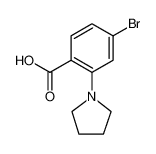
- 1099609-12-7
- C11H12BrNO2
- 270.12200
- All (0)
- China (0)
- (0)
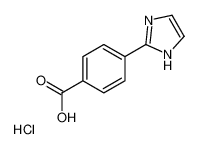
- 210962-27-9
- C10H9ClN2O2
- 224.64400
- All (0)
- China (0)
- (0)
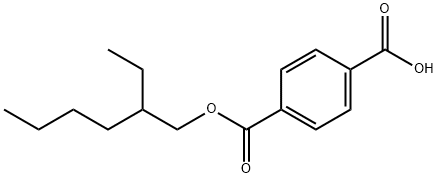
- 155603-50-2
- C16H22O4
- 278.34
- All (0)
- China (0)
- (0)
![Benzoic acid, 4-[(4-methyl-1-piperidinyl)methyl]-, hydrochloride (1:1)](https://chemcloud-1304660855.cos.ap-shanghai.myqcloud.com/compound/6f85e713afc749b483c90ab9d82d8367.png?imageMogr2/format/webp)
- 1158215-50-9
- C14H20ClNO2
- 269.76700
- All (0)
- China (0)
- (0)
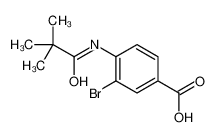
- 139058-18-7
- C12H14BrNO3
- 300.15000
- All (0)
- China (0)
- (0)
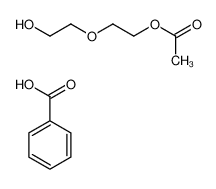
- 73727-30-7
- C13H18O6
- 270.27800
- All (0)
- China (0)
- (0)
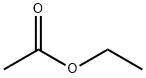
- 141-78-6
- C4H8O2
- 88.11
- All (39)
- China (31)
- (39)
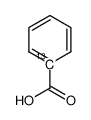
- 55320-26-8
- C7H6O2
- 123.13000
- All (410)
- China (38)
- (410)
- 114554-35-7
- C10H13ClO2
- 200.66200
- All (0)
- China (0)
- (0)
Related Products More >

- CNY Request For Quotation
- CNY Request For Quotation
- CNY Request For Quotation
- 141-78-6
- Request For Quotation
- 141-78-6
- Request For Quotation
- 79-20-9
- CNY 4500.0000
- 1ton
- 141-78-6
- CNY 5000.0000
- 1ton
 沪ICP备2021018848号-5


This solubility behavior is routinely exploited in practical applications such as liquid-liquid extraction and recrystallization in laboratory settings. For instance, during the purification of a reaction mixture containing benzoic acid, ethyl acetate is frequently selected as the organic solvent of choice to extract the acid from an aqueous phase. The efficient partitioning of benzoic acid into the ethyl acetate layer allows for effective separation and subsequent isolation of the compound.
In synthetic chemistry, this property is leveraged in work-up procedures. After completing a reaction where benzoic acid is a product or byproduct, adding ethyl acetate dissolves it, enabling straightforward separation from inorganic salts or other water-soluble impurities that remain in the aqueous phase. This practical step underscores the importance of understanding solvent-solute interactions for efficient compound isolation. The process is both commonplace and vital for achieving high purity in organic synthesis and analytical preparations.
From a chemical mechanism perspective, when benzoic acid is introduced into ethyl acetate, the molecules interact through dipole-dipole attractions between the carbonyl group of the acid and the ester functional group of the solvent. This allows the benzoic acid to disperse at a molecular level, forming a homogeneous solution. The process can be influenced by temperature, as higher temperatures generally increase molecular motion and solubility, which is a key consideration in industrial extraction or purification procedures. Such knowledge is essential for chemical engineers and chemists when designing efficient solvent systems for separations or reactions involving benzoic acid.
In practical terms, the solubility of benzoic acid in ethyl acetate has significant implications across multiple fields. In pharmaceuticals, this property is exploited during the extraction or crystallization of active compounds, allowing precise control over purity and yield. In food science, benzoic acid’s solubility in certain organic solvents informs its handling and formulation as a preservative. Even in environmental chemistry, understanding solvent interactions helps in modeling how aromatic acids migrate in different media. Thus, while the interaction might seem straightforward, it exemplifies broader interdisciplinary principles linking molecular chemistry with industrial, medicinal, and environmental applications.
Understanding this solubility is crucial in organic synthesis and purification processes, particularly in liquid-liquid extraction. For example, when benzoic acid is synthesized alongside nonpolar impurities, ethyl acetate can be used to selectively dissolve the benzoic acid, leaving the impurities in an aqueous or nonpolar phase. This differs from its solubility in water: benzoic acid is only slightly soluble in cold water because the hydrogen bonding capacity of water is not fully utilized by the relatively large nonpolar benzene ring of benzoic acid, but its solubility increases significantly in hot water or when deprotonated to form benzoate ions (e.g., in the presence of a base like sodium hydroxide). In contrast, its solubility in ethyl acetate is more consistent across moderate temperature ranges, making ethyl acetate a reliable solvent for benzoic acid in processes where temperature control is limited.
A common misconception is that all carboxylic acids exhibit the same solubility trend in esters like ethyl acetate, but this is not the case. The solubility depends heavily on the size of the alkyl or aryl group attached to the carboxylic acid. For instance, acetic acid (CH₃COOH), with a small methyl group, is highly soluble in ethyl acetate due to its high polarity and small nonpolar component, while stearic acid (C₁₇H₃₅COOH), with a long nonpolar alkyl chain, is only sparingly soluble in ethyl acetate because the nonpolar character dominates. Benzoic acid, with its aromatic ring (a moderate nonpolar moiety), falls between these two extremes, exhibiting moderate solubility that is sufficient for most lab-scale separations but not as high as smaller carboxylic acids. This distinction is important for selecting solvents in purification, as using ethyl acetate for a large carboxylic acid would lead to inefficient extraction, requiring a more nonpolar solvent like hexane instead.
Another point to clarify is that the solubility of benzoic acid in ethyl acetate is not due to hydrogen bonding between the two compounds, despite the presence of the carboxylic acid group. Ethyl acetate cannot act as a hydrogen bond donor because it has no O-H or N-H bonds, so the interactions are primarily dipole-dipole and van der Waals forces, which are strong enough to enable dissolution but not as strong as the hydrogen bonding that drives benzoic acid’s solubility in polar protic solvents like methanol. This difference in interaction strength explains why benzoic acid is more soluble in methanol than in ethyl acetate, a detail that matters when choosing solvents for recrystallization or reaction media.