


 Home
Home
In a chemistry lab, a researcher needs to prepare a 90% ethanol solution from pure (100%) ethanol.
Derived Questions:
1.What is the ratio of pure ethanol to water needed for a 90% solution?
2.How does the volume change when diluting ethanol, and should this be considered?
How to dilute 100 percent ethanol to 90 percent?
Related Encyclopedia
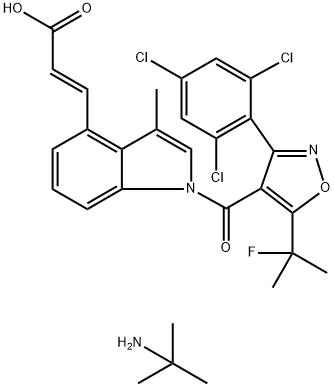
- 1898207-64-1
- C29H29Cl3FN3O4
- 608.92
- All (0)
- China (0)
- (0)
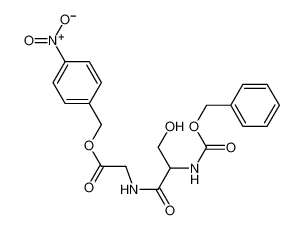
- 26054-98-8
- C20H21N3O8
- 431.39604
- All (0)
- China (0)
- (0)
Related Products More >

- 75-56-9
- Request For Quotation
- Request For Quotation
- 1310-73-2
- Request For Quotation
- 108-80-5
- USD 50.0000
- 50kg
- 108-78-1
- USD 4.5000
- 25kg
- 4559-86-8
- USD 750.0000
- 170kg
 沪ICP备2021018848号-5


Reason: The percentage of a solution is calculated based on the weight or volume of the solute (in this case, ethanol) relative to the total weight or volume of the solution. By adding water to pure ethanol, you decrease the concentration of ethanol in the solution, thereby diluting it. The ratio of 9 parts ethanol to 1 part water ensures that the final solution is 90% ethanol.
Derived Question 1: What is the ratio of pure ethanol to water needed for a 90% solution?
Answer: The ratio of pure ethanol to water needed for a 90% solution is 9:1. This means for every 9 parts of pure ethanol, you add 1 part of water to achieve the desired concentration.
Reason: The ratio is determined by the desired percentage of ethanol in the final solution. In this case, 90% ethanol means that for every 10 parts of the solution, 9 parts should be ethanol and 1 part should be water.
Derived Question 2: How does the volume change when diluting ethanol, and should this be considered?
Answer: When diluting ethanol with water, the total volume of the solution will increase due to the addition of water. However, the increase in volume may not be exactly proportional to the amount of water added due to the different densities and possible interactions between ethanol and water molecules. Therefore, it's important to measure the final volume accurately to ensure the correct concentration.
Reason: The volume change during dilution can affect the concentration of the solution if not accounted for. While the ratio of ethanol to water remains constant (9:1 in this case), the actual volumes of each component may vary slightly due to physical properties like density. Therefore, it's crucial to measure the final volume of the diluted solution to verify its concentration.
Usage and Application Notes:
When diluting ethanol, it's important to use accurate measuring tools to ensure the correct ratio of ethanol to water. It's also essential to mix the solution thoroughly to ensure an even distribution of ethanol and water. Additionally, it's important to consider the volume change during dilution and measure the final volume accurately to verify the concentration of the solution. In scientific and industrial applications, precise control over solution concentrations is crucial for achieving desired results and ensuring safety.
We can use the formula , where or (in decimal form), or (in decimal form).
From the formula, we can find
The volume of water that needs to be added is
For example, if you have 90 mL of 100% ethanol, the final volume of the 90% solution should be . So you need to add of water to 90 mL of 100% ethanol to get a 90% ethanol solution.