


 Home
Home
Bromocyclohexane is often used as a model for studying nucleophilic substitution and elimination reactions. Its reaction mechanism can involve either an SN1 or SN2 mechanism, depending on the conditions.
A possible follow-up question could be:
1."How does the solvent affect the reaction mechanism of bromocyclohexane?"
2."What are the factors that favor the SN1 or SN2 mechanism?"
What is the reaction mechanism of bromocyclohexane?
Related Encyclopedia
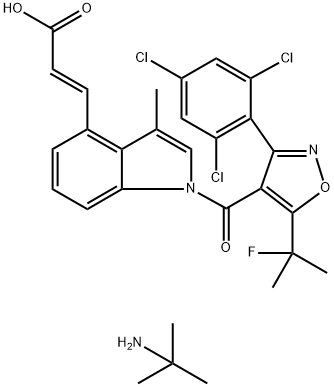
- 1898207-64-1
- C29H29Cl3FN3O4
- 608.92
- All (0)
- China (0)
- (0)
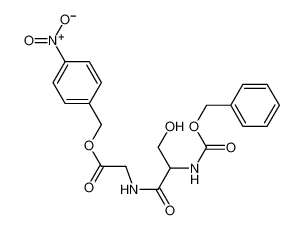
- 26054-98-8
- C20H21N3O8
- 431.39604
- All (0)
- China (0)
- (0)
Related Products More >

- 75-56-9
- Request For Quotation
- Request For Quotation
- 1310-73-2
- Request For Quotation
- 108-80-5
- USD 50.0000
- 50kg
- 108-78-1
- USD 4.5000
- 25kg
- 4559-86-8
- USD 750.0000
- 170kg
 沪ICP备2021018848号-5


Bromocyclohexane can undergo two main reaction mechanisms: nucleophilic substitution (SN1 or SN2) and elimination (E1 or E2), depending on the reaction conditions.
SN1 Mechanism: This is a two-step process where the leaving group (bromine) departs first, forming a carbocation intermediate. The nucleophile then attacks the carbocation. This mechanism is favored by polar protic solvents, which help stabilize the carbocation. Since bromocyclohexane is a cyclic structure, the transition state may involve conformational changes to stabilize the intermediate.
SN2 Mechanism: In this one-step process, the nucleophile attacks the electrophilic carbon from the opposite side of the leaving group, resulting in the inversion of configuration. A polar aprotic solvent, like acetone, helps the nucleophile to remain reactive by not solvate it too much. However, the bulky cyclohexane ring can present steric hindrance, which may slow the reaction.
E1 and E2 Mechanisms: In both elimination pathways, the bromine leaves, and a double bond is formed. The E1 mechanism involves the formation of a carbocation intermediate, which is then followed by the deprotonation of a carbon atom adjacent to the positively charged carbon. It is favored in the presence of heat and polar protic solvents. The E2 mechanism involves a single concerted step, where a base abstracts a proton as the bromine departs. This mechanism is favored by strong bases and polar aprotic solvents.
1. What factors determine whether bromocyclohexane undergoes SN1, SN2, E1, or E2 reactions?
The reaction mechanism that bromocyclohexane follows depends on several key factors:
Solvent: Polar protic solvents (e.g., ethanol, water) favor the SN1 and E1 mechanisms because they help stabilize carbocations and leaving groups. Polar aprotic solvents (e.g., DMSO, acetone) favor SN2 and E2 reactions because they do not stabilize the nucleophile too much, allowing it to remain reactive.
Nucleophile/Base: A strong nucleophile (e.g., OH⁻) favors the SN2 mechanism, while a weak nucleophile tends to favor the SN1 mechanism. On the other hand, a strong base (e.g., KOH) favors the E2 mechanism, and weaker bases are more likely to favor E1.
Temperature: Higher temperatures generally promote elimination reactions (E1 and E2), while lower temperatures favor substitution reactions (SN1 and SN2).
Steric Effects: The structure of the substrate, such as the size and bulkiness of the cyclohexane ring, also plays a role. The steric hindrance can slow down the SN2 reaction but can also affect the stability of the transition state in SN1 and E2 reactions.
2. What are the practical applications of understanding the reaction mechanism of bromocyclohexane?
Understanding the reaction mechanism of bromocyclohexane is crucial for selecting the appropriate reaction conditions in synthetic organic chemistry. For instance:
If the goal is to synthesize alcohols, controlling the reaction conditions to favor the SN1 or SN2 pathway is necessary. For example, using a strong nucleophile and a polar aprotic solvent like DMSO can promote SN2 substitution to yield the alcohol.
If the goal is to create alkenes, either an E1 or E2 mechanism is required. By using a strong base and heat, the elimination reaction can be pushed to form a double bond.
In industrial applications, controlling the mechanism allows chemists to optimize reaction efficiency, selectivity, and yield, especially when aiming to synthesize specific products in high quantities. Understanding these factors is essential for guiding reactions in a way that avoids unwanted by-products and maximizes desired outcomes.
Nucleophilic Substitution (SN) Reactions
SN2 Mechanism: A strong nucleophile, such as hydroxide ion (OH⁻) or cyanide ion (CN⁻), can attack the carbon atom bonded to the bromine in bromocyclohexane. The nucleophile donates a pair of electrons to form a new bond with the carbon, while the bromine leaves as a bromide ion (Br⁻). This occurs in a single step with inversion of configuration at the carbon center.
SN1 Mechanism: In a polar protic solvent, bromocyclohexane can first ionize to form a carbocation and a bromide ion. The carbocation is then attacked by a nucleophile. This mechanism involves two steps and may lead to a mixture of products with retention and inversion of configuration due to the planar nature of the carbocation intermediate.
Elimination Reactions
Bromocyclohexane can also undergo elimination reactions, such as E2 and E1, in the presence of a base. In the E2 mechanism, a base abstracts a proton from a carbon adjacent to the carbon bearing the bromine, while the bromine leaves simultaneously, forming a double bond. The E1 mechanism is similar to SN1, where the bromocyclohexane first ionizes to form a carbocation, and then a base abstracts a proton to form the alkene.