


 Home
Home
The question "How to quench sodium methoxide?" pertains to safely deactivating or neutralizing sodium methoxide (NaOCH₃), a strong base used in various organic reactions. Quenching prevents unwanted reactions and ensures safety.
Related questions:
1.What safety precautions should be taken when handling sodium methoxide?
2.How does sodium methoxide react with water or alcohols during quenching?
How to quench sodium methoxide?
Related Encyclopedia
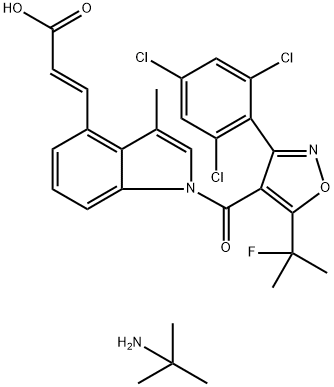
- 1898207-64-1
- C29H29Cl3FN3O4
- 608.92
- All (0)
- China (0)
- (0)
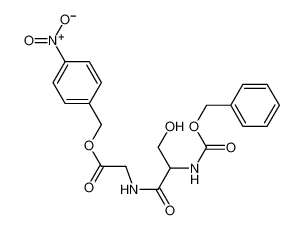
- 26054-98-8
- C20H21N3O8
- 431.39604
- All (0)
- China (0)
- (0)
Related Products More >

- 75-56-9
- Request For Quotation
- Request For Quotation
- 1310-73-2
- Request For Quotation
- 108-80-5
- USD 50.0000
- 50kg
- 108-78-1
- USD 4.5000
- 25kg
- 4559-86-8
- USD 750.0000
- 170kg
 沪ICP备2021018848号-5


Sodium methoxide (NaOCH₃) is a strong base commonly used in organic synthesis, especially in reactions like transesterifications and esterifications. Quenching sodium methoxide is necessary to safely deactivate it after the reaction has been completed, preventing unwanted side reactions and ensuring that the product is not affected by the continued presence of the strong base.
The most common method to quench sodium methoxide involves adding a proton source, such as water or alcohol, to neutralize the methoxide ion (CH₃O⁻) and convert it into methanol (CH₃OH). This method is effective because water or alcohol provides the necessary protons to neutralize the basic nature of sodium methoxide. However, this process must be conducted carefully, as the reaction between sodium methoxide and water or alcohol can be exothermic and lead to the release of heat. In some cases, sodium methoxide might react violently if added to water too quickly or in large amounts.
A safer approach might involve adding methanol (the solvent in which sodium methoxide is typically prepared) to the reaction mixture slowly to control the reaction's heat generation. After the reaction is quenched, the mixture should be neutralized and extracted to remove any residual base.
1. What safety precautions should be taken when handling sodium methoxide?
Handling sodium methoxide requires strict safety protocols, as it is a highly reactive and corrosive compound. Several important precautions should be followed:
Personal Protective Equipment (PPE): Always wear appropriate PPE, including gloves, goggles, and lab coats, when handling sodium methoxide. Since it is highly corrosive, ensure that gloves are resistant to chemicals and can handle direct contact without degradation.
Ventilation: Work in a well-ventilated area or a fume hood to avoid inhaling any fumes that might arise during reactions involving sodium methoxide. Reactions with moisture or other materials could release harmful gases.
Control Handling: Sodium methoxide should be handled with care, especially in solid form, as it can react violently with moisture. Keep the container tightly closed when not in use to prevent accidental exposure to moisture.
Reaction Monitoring: When quenching, always do it slowly and in a controlled manner. Adding sodium methoxide to water or alcohol in large quantities or too quickly can cause an exothermic reaction, potentially causing splashing or the release of heat, which could be dangerous.
Example:
In many organic syntheses, sodium methoxide is used to deprotonate a molecule or facilitate nucleophilic substitution. Once the reaction is completed, adding a controlled amount of methanol or water ensures that the sodium methoxide is neutralized without posing a risk to the experiment or the researcher.
2. How does sodium methoxide react with water or alcohols during quenching?
When sodium methoxide is quenched with water or alcohols, the reaction that occurs is essentially the neutralization of the methoxide ion (CH₃O⁻), which is a strong base. The reaction can be summarized as follows:
With Water:
CH₃O⁻+H₂O→CH₃OH+OH−\text{CH₃O⁻} + \text{H₂O} \rightarrow \text{CH₃OH} + \text{OH}⁻CH₃O⁻+H₂O→CH₃OH+OH− This reaction forms methanol (CH₃OH) and hydroxide ions (OH⁻). While this may seem straightforward, the release of hydroxide ions in the presence of water can make the solution more basic initially, and additional acid might be required to neutralize the solution to the desired pH.
With Alcohols:
CH₃O⁻+ROH→CH₃OH+RO−\text{CH₃O⁻} + \text{ROH} \rightarrow \text{CH₃OH} + \text{RO}⁻CH₃O⁻+ROH→CH₃OH+RO− When sodium methoxide is quenched with alcohol, such as methanol, it forms more methanol and an alkoxide ion (RO⁻). Alcohols can act as proton donors, similar to water, but in a more controlled manner.
The reaction speed can vary depending on the type of alcohol used and its reactivity. Methanol, being the solvent used for sodium methoxide preparation, is often used to quench the reaction, but excess alcohol must be avoided to prevent the formation of too much methoxide salt.
Example:
In a transesterification reaction where sodium methoxide is used as a catalyst to convert triglycerides into biodiesel, quenching with methanol is common. The methanol reacts with the sodium methoxide to neutralize it and form more methanol, facilitating the separation of biodiesel from the reaction mixture.
Considerations in Use and Applications:
Controlled Addition: When quenching sodium methoxide, it's important to add the proton source slowly. Rapid addition of water or alcohol to sodium methoxide may lead to excessive heat generation or splattering. A gradual approach ensures that the exothermic reaction is controlled and does not lead to safety issues.
Proper Waste Disposal: After quenching and neutralization, make sure the mixture is properly neutralized and disposed of according to local regulations. Sodium methoxide and its reaction products, such as methanol or alcohols, can be harmful to the environment and human health if disposed of improperly.
Reaction Conditions: In some cases, excess methanol may need to be removed to recover the final product. Solvent removal might require careful distillation or other separation techniques, especially when working with large-scale reactions.
By paying attention to these precautions and handling practices, quenching sodium methoxide can be done safely, allowing for the successful completion of the reaction without unwanted side effects.
1.Prepare in advance: Wear appropriate personal protective equipment, including chemical-resistant gloves, goggles and a lab coat. Work in a well-ventilated fume hood. Prepare a suitable quenching agent, such as isopropyl alcohol.
2.Slow addition: Slowly add the quenching agent to the sodium methoxide solution. For example, when using isopropyl alcohol, add it dropwise to the sodium methoxide solution with stirring. This is to prevent violent reactions and excessive heat generation.
3.Monitor the reaction: Observe the reaction process. There may be heat and gas evolution. Make sure the reaction is under control.
4.Neutralize and dispose: After the reaction is complete, the resulting solution may need to be neutralized and disposed of properly according to local regulations to avoid environmental pollution.
Never quench sodium methoxide with water directly as it will cause a violent reaction.