


 Home
Home
Hello, I’d like to ask about why ethyl acetate is miscible with methanol but not with water.
Why does ethyl acetate mix well with methanol but not with water, and what does this say about their chemical
Related Encyclopedia
![[4-[(E)-2-(5,5,8,8-tetramethyl-6,7-dihydronaphthalen-2-yl)prop-1-enyl]phenyl]methanol](https://chemcloud-1304660855.cos.ap-shanghai.myqcloud.com/compound/50d21f6fcaa34dec91920183ac1c1739.png?imageMogr2/format/webp)
- 71441-30-0
- C24H30O
- 334.49400
- All (0)
- China (0)
- (0)
- 914771-42-9
- C5H12O3
- 120.14700
- All (0)
- China (0)
- (0)
- 67-56-1
- CH4O
- 32.04
- All (93)
- China (90)
- (93)
- 141-78-6
- C4H8O2
- 88.11
- All (39)
- China (31)
- (39)
- 73998-95-5
- C6H5Cl2NO
- 178.02
- All (0)
- China (0)
- (0)
- 114554-35-7
- C10H13ClO2
- 200.66200
- All (0)
- China (0)
- (0)
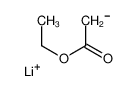
- 189811-59-4
- C4H7LiO2
- 94.03820
- All (0)
- China (0)
- (0)
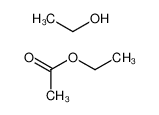
- 117204-61-2
- C6H14O3
- 134.17400
- All (0)
- China (0)
- (0)
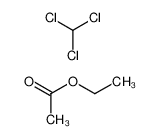
- 62018-65-9
- C5H9Cl3O2
- 207.48300
- All (0)
- China (0)
- (0)
- 75234-34-3
- C31H38O8
- 538.62900
- All (0)
- China (0)
- (0)
Related Products More >

- 141-78-6
- Request For Quotation
- 141-78-6
- Request For Quotation
- 67-56-1
- Request For Quotation
- 67-56-1
- CNY 2400.0000
- 1ton
- 79-20-9
- CNY 4500.0000
- 1ton
- 141-78-6
- CNY 5000.0000
- 1ton
- 165668-41-7
- Request For Quotation
- 5kg
- 165668-41-7
- Request For Quotation
- 1kg
 沪ICP备2021018848号-5


Ethyl Acetate and Methanol: Why They Are Miscible
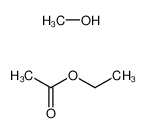
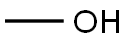
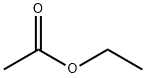
Methanol is a polar solvent with a hydroxyl group that allows it to form hydrogen bonds with other polar molecules. Ethyl acetate, while not highly polar, has a polar carbonyl group and polar C-O bonds due to the electronegativity difference between carbon and oxygen. This gives ethyl acetate a moderate dipole moment, making it a polar aprotic solvent .
Although ethyl acetate cannot form hydrogen bonds as a hydrogen donor , it can act as a hydrogen bond acceptor through its carbonyl oxygen. Methanol, as a hydrogen bond donor , can form hydrogen bonds with the oxygen atom in ethyl acetate’s carbonyl group. These hydrogen bonding interactions, along with dipole-dipole interactions between the polar regions of both molecules, enhance their mutual solubility. Additionally, both compounds have significant hydrocarbon portions , which are nonpolar but can interact through London dispersion forces. The combination of these intermolecular forces—hydrogen bonding, dipole-dipole interactions, and dispersion forces—allows ethyl acetate and methanol to mix freely, making them miscible in all proportions.
Ethyl Acetate and Water: Why They Are Immiscible
Water is a highly polar solvent with strong hydrogen bonding between its molecules. Each water molecule can act as both a hydrogen bond donor and an acceptor , leading to a dense network of hydrogen bonds that give water its high surface tension, boiling point, and cohesive properties.
Ethyl acetate, despite its polar carbonyl group, has a relatively large nonpolar ethyl group . The nonpolar portion of ethyl acetate disrupts the hydrogen bonding network of water. When ethyl acetate is added to water, the water molecules prioritize their own hydrogen bonding interactions, forcing the ethyl acetate molecules to cluster together. This creates a thermodynamic barrier to mixing, as the energy required to break the water-water hydrogen bonds and accommodate the less polar ethyl acetate molecules is not sufficiently offset by the weaker interactions between water and ethyl acetate.
While the carbonyl oxygen of ethyl acetate can accept hydrogen bonds from water, the number of such interactions is limited compared to the extensive hydrogen bonding within pure water. The nonpolar ethyl chains of ethyl acetate are hydrophobic, meaning they repel water molecules, a phenomenon often referred to as the “hydrophobic effect.” This effect drives the separation of the two liquids into distinct layers, making them immiscible. At room temperature, ethyl acetate is only slightly soluble in water , and beyond this point, the liquids form separate phases.
Key Difference: Polar vs. Nonpolar Character
The primary reason for the difference in miscibility lies in the balance between polar and nonpolar groups in ethyl acetate. Methanol, with its smaller nonpolar methyl group and strong polar hydroxyl group, is more compatible with the moderately polar ethyl acetate. Water, with its extreme polarity and lack of nonpolar groups, cannot effectively solvate the nonpolar portion of ethyl acetate, leading to immiscibility. This principle is crucial in organic chemistry, where solvents are chosen based on their polarity to extract or separate compounds. For example, ethyl acetate is commonly used in liquid-liquid extraction to separate organic compounds from aqueous solutions, taking advantage of its immiscibility with water and ability to dissolve nonpolar or moderately polar substances.
In summary, ethyl acetate’s miscibility with methanol arises from hydrogen bonding and dipole-dipole interactions, while its immiscibility with water is due to the hydrophobic effect and the dominance of water’s internal hydrogen bonding. This illustrates how subtle differences in molecular structure can drastically affect solubility, a fundamental concept in chemistry and solvent selection.
Ethyl acetate is an ester with a relatively large nonpolar hydrocarbon portion and a polar ester functional group
Ethyl acetate is miscible with methanol because both are polar solvents with similar polarity levels, allowing them to mix freely.
In contrast, water is a highly polar solvent, and ethyl acetate, being less polar, doesn't mix well with it.This is due to the principle of "like dissolves like," where polar solvents dissolve polar substances and nonpolar solvents dissolve nonpolar substances.
Knowing this helps in selecting solvents for extractions or reactions where specific solubility is needed.
Ethyl acetate and methanol are both organic solvents with similar chemical properties, which is why they mix well.Ethyl acetate, however, is less polar than water, which is a very polar solvent.
This difference in polarity means that ethyl acetate doesn't interact well with water molecules, leading to immiscibility.
This principle is important in chemistry for predicting how substances will behave in different solvents and for applications like liquid-liquid extraction, where choosing the right solvent is crucial.
Ethyl acetate is miscible with methanol because they both have similar types of polar bonds and can form hydrogen bonds with each other.Water, on the other hand, has a strong ability to form hydrogen bonds due to its highly polar nature, which ethyl acetate can't match.
This difference affects their solubility.
In practical terms, this means that if you need a solvent that mixes with both water and organic compounds, you might need to use a different solvent or a mixture of solvents to achieve the desired solubility.
Ethyl acetate and methanol are both organic compounds, and they can interact through dipole-dipole interactions and hydrogen bonding. Ethyl acetate has a polar carbonyl group and an ester linkage, which can form hydrogen bonds with the hydroxyl group in methanol. These interactions allow the molecules to mix freely, leading to miscibility. The molecular structures of ethyl acetate and methanol are compatible in terms of polarity and hydrogen bonding capabilities, facilitating the mixing process.
On the other hand, water is a highly polar molecule with strong hydrogen bonding between its molecules. While ethyl acetate does have some polar character, it is not polar enough to overcome the strong hydrogen bonding network in water. Water molecules form extensive hydrogen bonds with each other, creating a tightly knit structure that is difficult for ethyl acetate molecules to penetrate. Additionally, ethyl acetate has a significant non-polar portion due to its ethyl group , which further reduces its affinity for the highly polar water environment. As a result, ethyl acetate and water do not mix well and tend to form separate layers when combined.
In summary, the miscibility of ethyl acetate with methanol is due to their compatible molecular structures and the ability to form intermolecular interactions such as hydrogen bonds. In contrast, the strong hydrogen bonding in water and the relatively lower polarity of ethyl acetate make them immiscible.