


 Home
Home
Hello, I'd like to ask a few questions:
Can I use olive oil as a lubricant? Could you explain and suggest a catchy question-style title that includes the keyword? Also, is olive oil effective as a mechanical lubricant?
Can I use olive oil to lubricate door hinges or bike chains?
Is it safe to use olive oil for long-term lubrication of metal parts?
Olive Oil as Lubricant: Genius Hack or DIY Disaster?
Related Encyclopedia
- 141903-93-7
- C17H35N
- 253.46600
- All (141)
- China (22)
- (141)

- 223487-44-3
- C18H17D17O2
- 300
- All (0)
- China (0)
- (0)
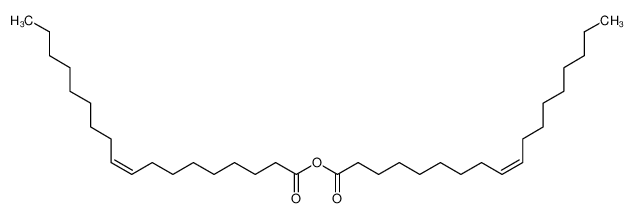
- 6085-36-5
- C36H66O3
- 546.90700
- All (0)
- China (0)
- (0)
![OLEIC ACID-[9,10-3H]](https://chemcloud-1304660855.cos.ap-shanghai.myqcloud.com/compound/c559f7e4610543758edba973fc60c82f.png?imageMogr2/format/webp)
- 636-34-0
- C18H32O2T2
- 286.48000
- All (0)
- China (0)
- (0)
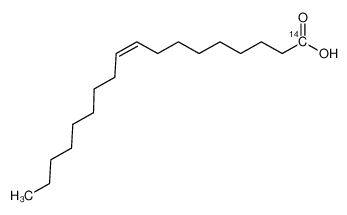
- 3343-81-5
- C18H34O2
- 284.48000
- All (0)
- China (0)
- (0)
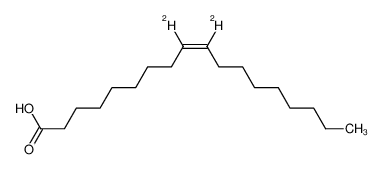
- 5711-29-5
- C18H32D2O2
- 284.47400
- All (0)
- China (0)
- (0)

- 3687-45-4
- C36H68O2
- 532.92
- All (0)
- China (0)
- (0)

- 312623-86-2
- C18H34O2
- 300.32900
- All (0)
- China (0)
- (0)
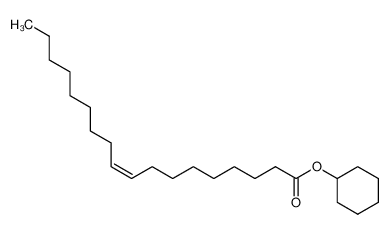
- 101296-25-7
- C24H44O2
- 364.60500
- All (0)
- China (0)
- (0)

- 13097-36-4
- C18H33AgO2
- 389.32200
- All (0)
- China (0)
- (0)
Related Products More >

- 60-33-3
- USD 30.0000
- 25kg
- 989-51-5
- Request For Quotation
- 93-83-4
- Request For Quotation
- 25kg/drum
- 93-83-4
- Request For Quotation
- Bottle,barrel,cargo,container,etc.
- 93-83-4
- Request For Quotation
- 93-83-4
- Request For Quotation
- 90028-20-9
- Request For Quotation
- 84650-60-2
- Request For Quotation
 沪ICP备2021018848号-5


Why Olive Oil Works as a Lubricant
Slippery Texture:
Contains oleic acid, which provides temporary friction reduction.
Non-Toxic:
Safe for food-grade applications (e.g., kitchen tools).
Biodegradable:
Environmentally preferable to petroleum-based lubricants.
Is Olive Oil Effective for Mechanical Lubrication?
Limited Effectiveness:
Pros:
Works for light, low-friction tasks (e.g., squeaky hinges).
Cons:
Low viscosity breaks down under high pressure (e.g., car engines).
Oxidizes quickly, forming sticky residues that attract dust.
Comparison vs. Synthetic Lubricants:
Property Olive Oil Synthetic Oil
Viscosity Low (thin) High (stable under pressure)
Oxidation Rapid (goes rancid) Resistant
Durability Days–weeks Months–years
Verdict: Only for emergency/temporary fixes.
Can Olive Oil Lubricate Door Hinges or Bike Chains?
Door Hinges:
Yes, but requires frequent reapplication (every 1–2 weeks).
Better alternative: White lithium grease (long-lasting).
Bike Chains:
No—olive oil lacks extreme-pressure additives and washes off easily.
Use instead: Dedicated bike chain lubricant (wet/dry formula).
Pro Tip: For hinges, mix olive oil + beeswax for longer-lasting smoothness.
Is Olive Oil Safe for Long-Term Metal Lubrication?
No, due to:
Oxidation:
Rancidity leads to gumming and corrosion (especially on steel).
Poor Water Resistance:
Washes off easily, exposing metal to moisture.
Dust Attraction:
Sticky residues trap dirt, accelerating wear.
Exception: Stainless steel or brass components fare better but still require frequent cleaning.
Is olive oil effective as a mechanical lubricant?
Short-term performance:
Oleic acid (73%) forms a temporary boundary layer, reducing friction in low-stress mechanisms (e.g., wooden drawers).
A 2018 study found olive oil reduced friction by 22% in low-load tests, vs. 35% for mineral oil.
Limitations:
High pour point (7°C) causes thickening in cold conditions.
Oxidation at >60°C forms sticky polymers, increasing wear over time.
Can olive oil lubricate door hinges or bike chains?
Door hinges:
Suitable for occasional use on rust-free hinges. Apply 1–2 drops; wipe excess to prevent dust accumulation.
Bike chains:
Not recommended. Its high viscosity (vs. 20–30 mPa·s for bike oils) creates drag, and oxidation clogs drivetrains after 2–3 weeks.
Is long-term metal lubrication with olive oil safe?
Corrosion risk:
Free fatty acids (0.3–0.8% in EVOO) can react with steel, forming iron soaps that accelerate pitting.
A 2020 study showed 12-month exposure caused 15% more corrosion than synthetic oil.
Alternative advice:
Use food-grade mineral oil for food-contact surfaces.
For metal parts, choose petroleum-based lubricants (e.g., WD-40) with rust inhibitors.
However, olive oil is not ideal for all lubrication purposes due to several drawbacks. Firstly, it tends to oxidize and polymerize when exposed to air and heat, leading to the formation of a sticky residue that can impair machinery or tools over time. Secondly, it lacks the long-term stability and resistance to temperature changes found in synthetic lubricants. Therefore, while olive oil might suffice for temporary or low-demand applications, it is generally unsuitable for industrial or high-performance requirements.
In everyday scenarios, olive oil can be used as a lubricant for simple household tasks. For example, it can help in unsticking a squeaky door hinge or making the sliding of drawers smoother. Additionally, it can be utilized for conditioning and maintaining wooden utensils or cutting boards by penetrating the wood and providing a protective layer against moisture. Key considerations include avoiding its use on materials that can stain or absorb the oil, ensuring it does not come into contact with surfaces intended for food preparation if used in large quantities, and recognizing its limitations in terms of longevity and performance compared to commercial lubricants. This overview highlights the potential uses of olive oil as a makeshift lubricant along with its limitations and appropriate application contexts.